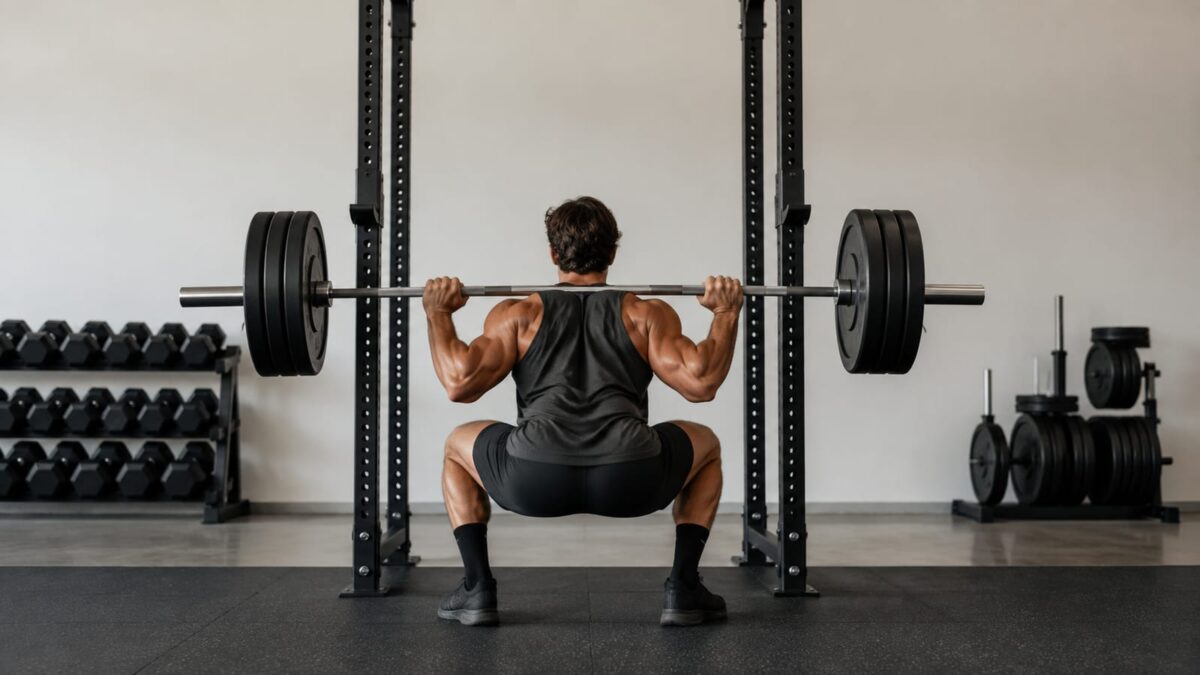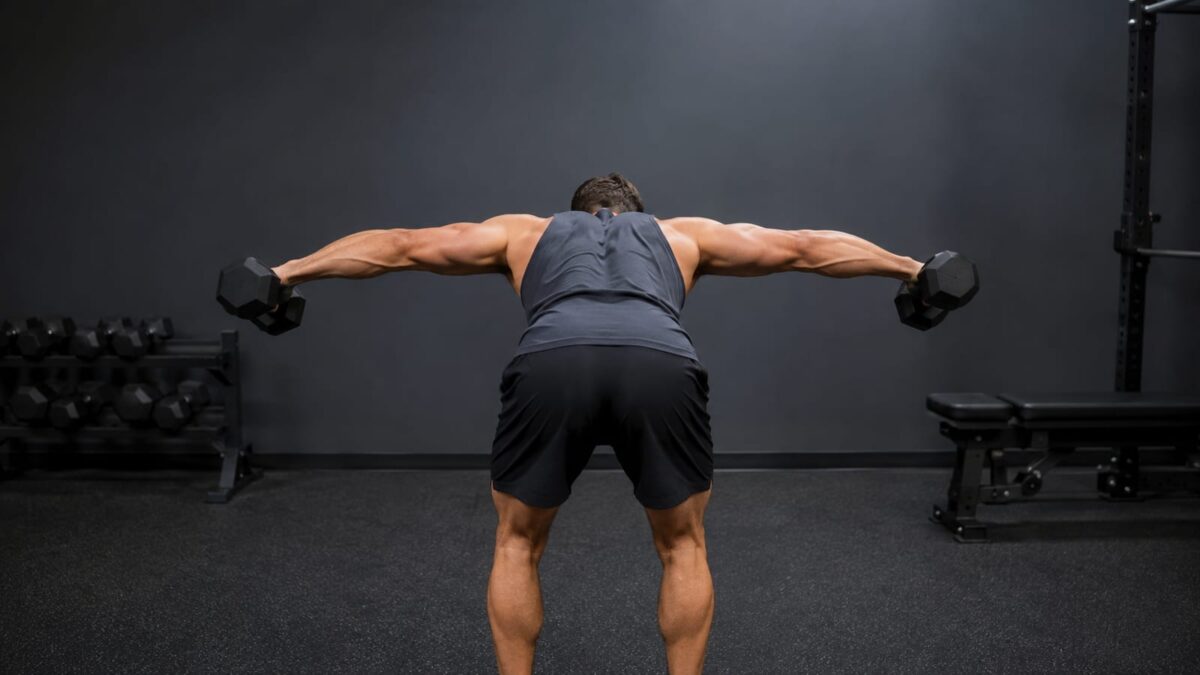
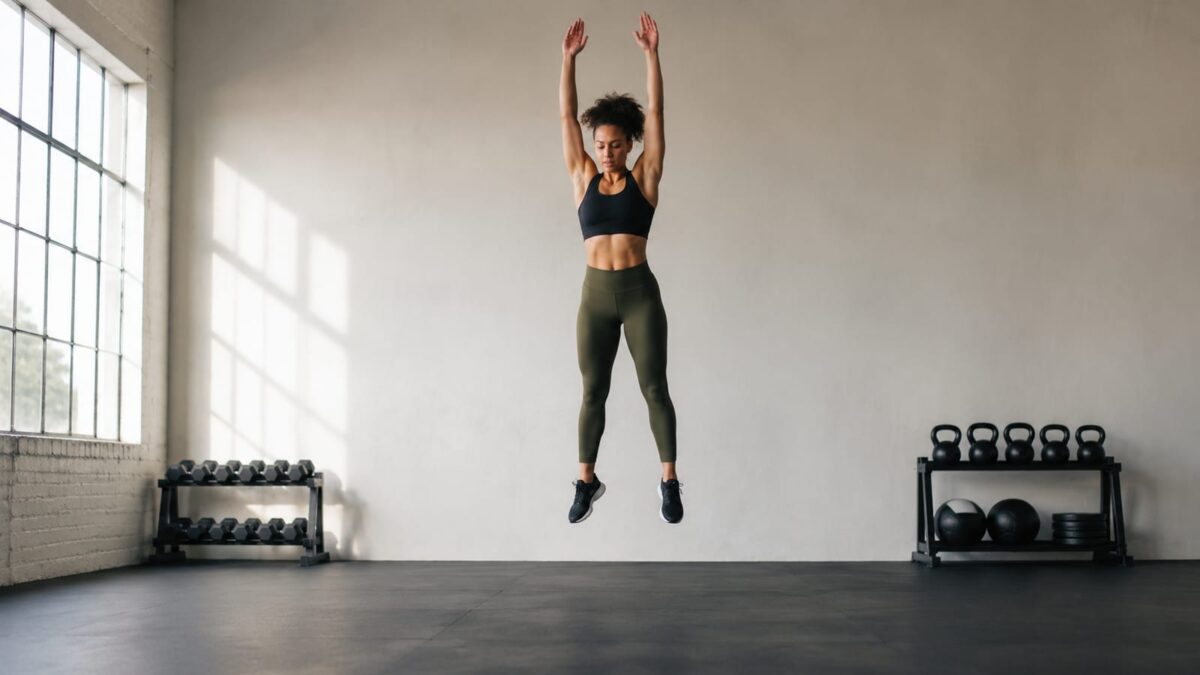
Burpee Muscle Breakdown by Movement Phase

 0
0
 0
0 Burpees work nearly every major muscle group, but don’t mistake movement for complete strength training. If you’re asking what muscles do burpees work, the main list is your quads, glutes, chest, shoulders, triceps, core, hamstrings, and calves. Keep burpees for conditioning and muscular endurance. Build strength and muscle with exercises you can load and progress.
Last updated: 2026-08-22
What muscles do burpees work?
The muscles doing the most work are your quads, glutes, chest, front shoulders, triceps, and core. Your hamstrings, calves, hip flexors, serratus anterior, spinal erectors, and upper back also contribute.
However, the exact demand depends on the version. Remove the push-up, and your chest and triceps do much less. Remove the jump, and the exercise becomes easier on your calves and produces less lower-body power.
| Muscle group | Main job during a burpee | Training demand |
|---|---|---|
| Quadriceps | Bend and straighten the knees | High |
| Glutes | Extend the hips and power the jump | High |
| Chest | Press the body away from the floor | High with a push-up |
| Front shoulders | Support the plank and assist the press | High with a push-up |
| Triceps | Straighten the elbows | High with a push-up |
| Abdominals and obliques | Keep the trunk from sagging or twisting | Moderate to high |
| Hamstrings | Control the hips and help with jumping | Moderate |
| Calves | Push through the floor during the jump | Moderate |
| Hip flexors | Pull the legs forward under the body | Moderate |
| Spinal erectors | Hold the spine in a controlled position | Stabilizing |
| Serratus anterior | Hold the shoulder blades against the rib cage | Stabilizing |
Burpees train many muscles in the same rep. They don’t train every muscle equally, and they provide little direct work for your biceps or upper back.
Which muscles are primary during the squat and floor transition?
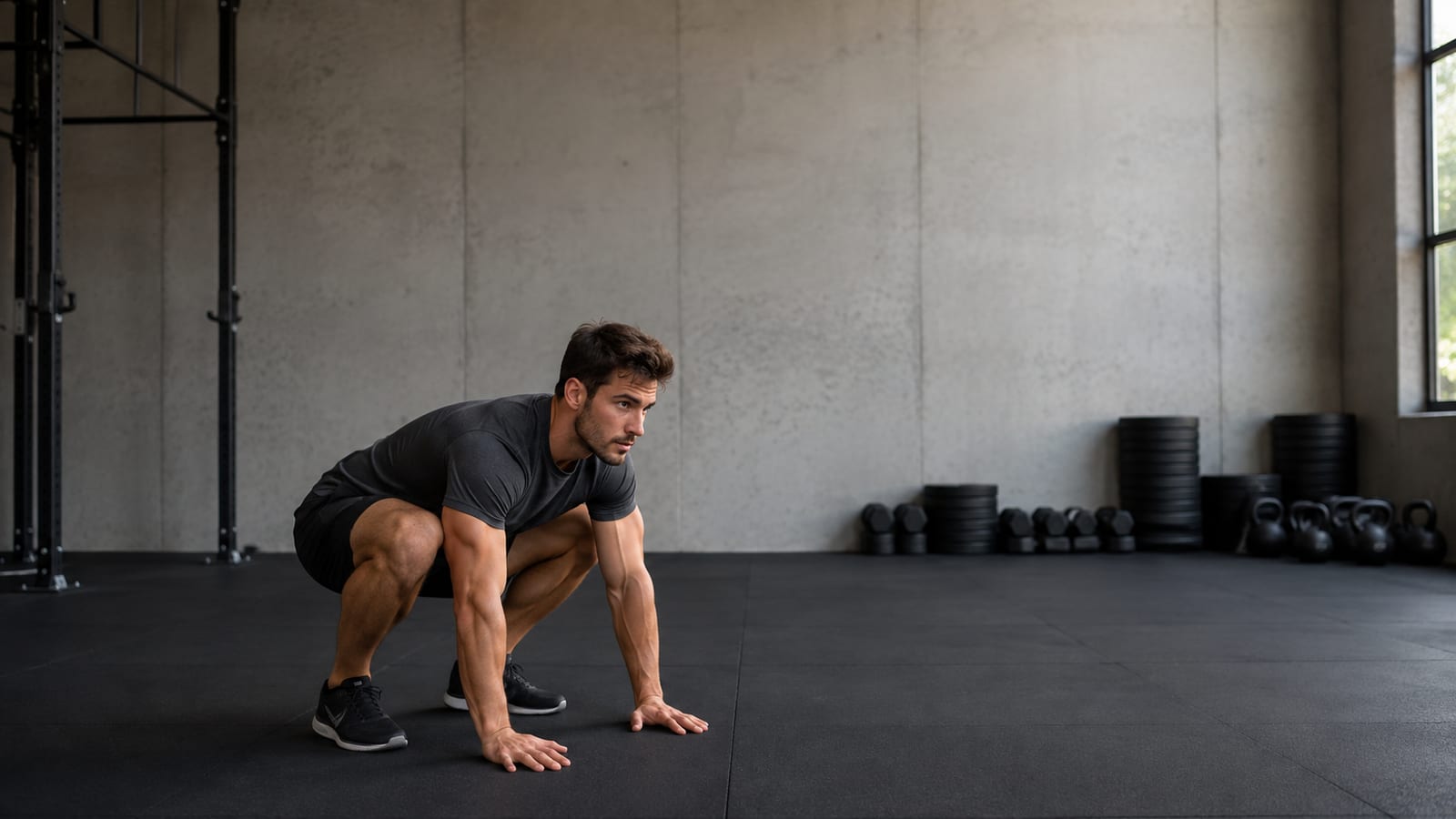
Your quads and glutes handle most of the squat and standing work. The quads straighten your knees, while the glutes drive your hips forward as you return to standing.
Meanwhile, your hamstrings help control the descent and extend the hips. They contribute, but a burpee isn’t a strong hamstring exercise. A hip hinge, leg curl, or similar movement gives them clearer resistance and better progression.
Your hip flexors work hard when you pull your feet back toward your hands. Your abdominal muscles also brace your trunk so the return doesn’t turn into a loose, rounded scramble.
Use the squat depth that lets you place your hands down without losing control. Your knees can move forward if they track with your toes and stay comfortable. Forcing an arbitrary shin angle usually makes the movement worse, not safer.
If the bottom position feels awkward, work on finding a comfortable squat depth before chasing faster reps.
What muscles work during the plank and push-up portion?
A full push-up burpee trains your chest, front shoulders, and triceps. Your chest and shoulders help press your body upward, while your triceps straighten your elbows.
The serratus anterior also works around the side of your rib cage. It helps your shoulder blades move and stay controlled against your torso. Meanwhile, your core keeps your hips from dropping as your arms produce force.
Hand position changes how the press feels. Hands placed too wide can make the shoulder position awkward, while hands set too far forward increase the demand on the shoulders. Use a stable position similar to your normal push-up hand placement.
A no-push-up burpee removes most of the pressing work. Your shoulders still support you in the plank, but your chest and triceps no longer complete a full loaded press.
That version isn’t a failed burpee. Keep it if your goal is conditioning or if repeated push-ups make your technique fall apart.
How do burpees train the core?
Your core works mainly to prevent unwanted movement. The abdominals, obliques, spinal erectors, and deeper trunk muscles hold your ribs, pelvis, and spine together as your limbs move.
During the plank, these muscles resist lower-back sag. During the foot transition, they limit twisting and excessive rounding. During the jump and landing, they help transfer force between your upper and lower body.
This is useful bracing work, but it won’t replace direct core training forever. Burpees don’t offer an easy way to add resistance or target trunk movement through a controlled range.
Watch your belt-line position during the plank. If your hips drop before your chest, the set has stopped serving its purpose.
What muscles power the jump?
Your glutes and quads produce most of the force for the jump. The glutes extend your hips, while the quads straighten your knees.
Your hamstrings assist with hip extension. Then your calves finish the push by extending the ankles as your feet leave the floor. The hip flexors help reposition your legs before the next landing and descent.
Jump height matters less than a clean takeoff and quiet landing. You don’t need to pull your knees toward your chest or slap the ceiling on every rep.
Land with your knees and hips slightly bent. Then control the next descent instead of crashing straight into it. Your joints get a vote.
Do burpees build muscle or mainly improve conditioning?
Burpees mainly improve conditioning and muscular endurance. An untrained person may gain some muscle because any hard bodyweight work is a new demand. However, those gains become harder to measure as the body adapts.
The problem is progression. Adding faster reps often raises breathing difficulty more than muscle tension. Adding endless repetitions can also turn quality reps into rushed floor contact.
For muscle gain, use exercises that let you add weight or reps while keeping repeatable technique. Squats, presses, rows, hinges, and well-chosen bodyweight strength exercises make progression easier to track.
Burpees can support that plan. They shouldn’t become the plan.
Are burpees good cardio?
Burpees are effective cardio because they move a large amount of muscle through repeated floor-to-standing transitions. Your heart rate rises quickly, especially when the push-up and jump stay in the rep.
However, a high heart rate doesn’t make every interval productive. If your pace forces poor landings, sagging planks, or partial push-ups, the work bout is too aggressive.
An average estimate places the energy cost at about 0.5 calories per burpee. Treat that as a rough estimate, not a promise. Body size, pace, technique, and the chosen variation all change the actual cost.
Use burpees to build work capacity you can recover from. The broader Physical Activity Guidelines for Americans also make the larger point clear: conditioning and muscle-strengthening work both belong in a complete plan.
How should you do a burpee with sound technique?
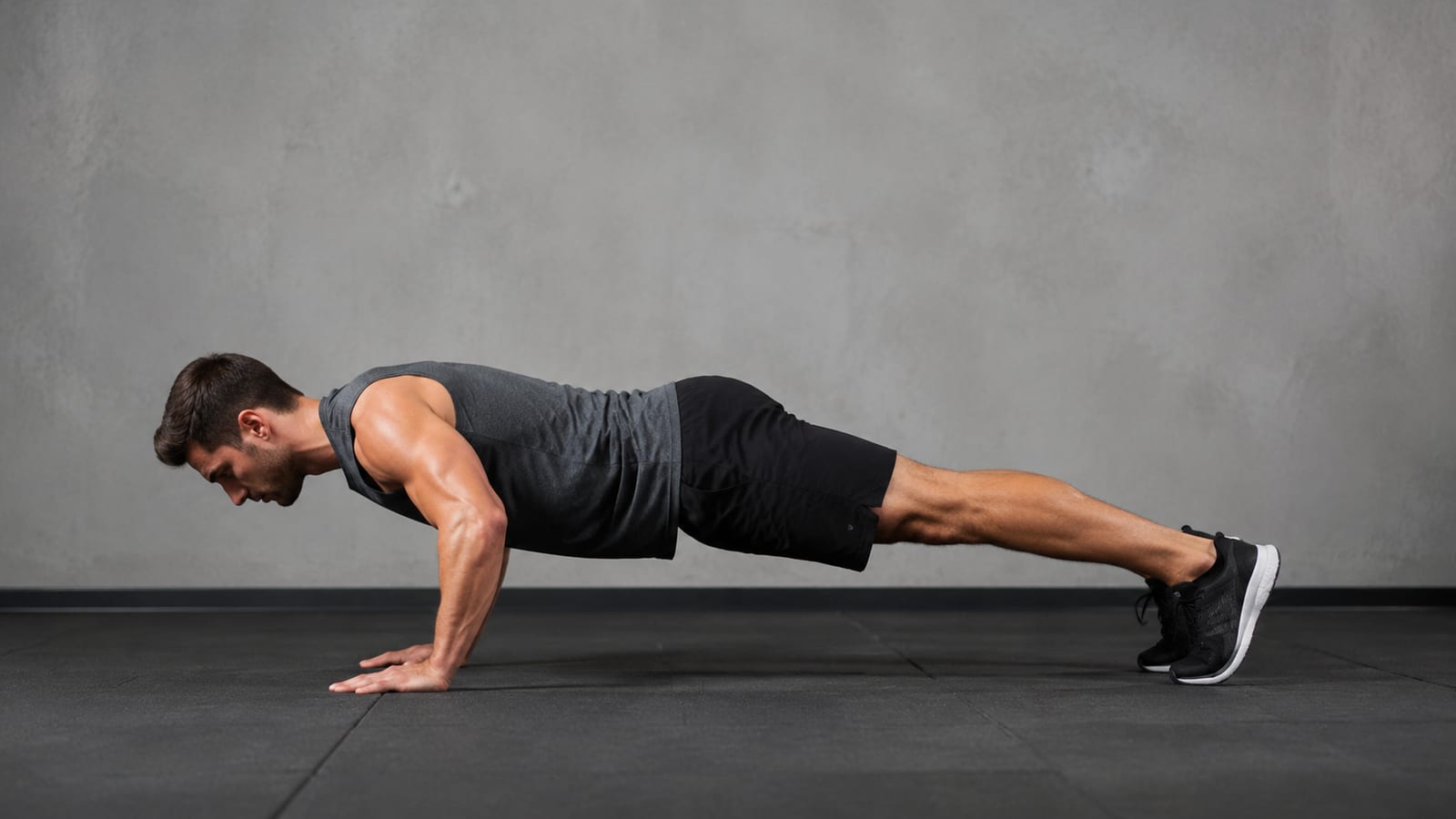
Move fast only after you can repeat the same positions. A clean burpee should look like a squat, a controlled plank, an optional push-up, a stable return, and a soft jump.
- Lower under control. Bend your knees and hips, then place your hands firmly on the floor. Don’t throw your torso downward and hope your wrists catch you.
- Move into a strong plank. Jump or step your feet back. Keep your ribs and pelvis controlled so your lower back doesn’t sag.
- Complete the push-up if included. Lower your chest with your elbows in a comfortable path. Press until your arms straighten without forcing your shoulders forward.
- Bring your feet under you. Jump or step forward far enough to regain a useful squat position. Don’t leave your feet behind your hips and stand through a rounded back.
- Stand and jump smoothly. Push through the floor, extend your hips, and leave the ground if the variation calls for it. Land softly before starting the next rep.
Slow the transition if your feet land unevenly. Also, raise your hands onto a stable bench if the floor position exceeds your current mobility or strength.
Good reps before more speed.
Which burpee variation should you use?
Use the version that matches your goal and current control. The hardest-looking option isn’t automatically the most useful.
| Variation | Best use | Main trade-off |
|---|---|---|
| Step-back burpee | Beginners, limited space, or lower-impact conditioning | Less explosive and slower |
| No-push-up burpee | Conditioning without repeated pressing | Less chest and triceps work |
| Standard burpee | Full-body conditioning with a push-up and jump | More fatigue and greater technique demand |
| Low-impact burpee | Sensitive knees, ankles, wrists, or lower fitness | Lower peak intensity |
| Hands-elevated burpee | Limited floor mobility or plank strength | Less upper-body loading |
The answer to what muscles burpees work changes with these choices. A step-back version still trains your legs and core, but it reduces impact. An elevated version shortens the path to the floor and makes the plank easier to control.
There’s no sacred standard burpee. Royal Huddleston Burpee Sr. created the exercise in 1939 at Teachers College, Columbia University, as a quick and simple fitness test for his PhD thesis. The original four-count burpee was performed four times and didn’t resemble every punishing modern variation now carrying the name.
The exercise became widely known after the U.S. Army adopted it as part of its physical fitness testing in 1942. That history explains why burpees are good for testing broad work capacity. It doesn’t mean every workout needs the hardest version.
How should you program burpees without wrecking recovery?
Use brief work bouts and stop before your positions become sloppy. Rest until you can control the next round rather than starting again while your breathing still dictates your technique.
Place burpees after strength work or on a separate conditioning day. Doing them first can reduce the quality of your squats, presses, and hinges, especially if the burpees include full push-ups and jumps.
Progress one part at a time:
- Add a few quality reps before trying to move faster.
- Extend the work bout only if technique stays consistent.
- Reduce rest only when the next round still looks controlled.
- Move to a harder variation after the current version feels repeatable.
- Reduce burpee work if your next strength session gets worse.
Don’t increase speed, total work, and variation difficulty together. Change one variable so you know what your body can recover from.
The plan has to fit your week. If burpees leave your legs flat for training that matters more, cut the dose.
What are the most common burpee mistakes?
Rushed reps cause most of the trouble. Fatigue is expected, but the exercise shouldn’t dissolve into uncontrolled falls and loose push-ups.
- Dropping onto the hands: Lower through your hips and knees instead of throwing your weight at the floor.
- Letting the lower back sag: Brace before your feet move back. Use a step-back or elevated version if you can’t hold the plank.
- Using a poor push-up position: Keep your hands stable and your elbows in a comfortable path. Skip the push-up when fatigue changes the position.
- Landing hard: Bend your knees and hips as you touch down. Remove the jump if you can’t land quietly.
- Standing with a rounded back: Bring your feet far enough forward before rising.
- Chasing rep counts: Stop the round when your positions change. Extra ugly reps don’t improve the muscles burpees work.
- Doing too much too soon: Add work only after soreness, joint comfort, and strength performance remain steady.
Make every rep serve a purpose. If speed hides the movement, slow down.
FAQ
Do burpees work the biceps?
Not enough to count as direct biceps training. The biceps may help stabilize the elbow and shoulder, but they don’t pull against meaningful resistance during a standard burpee. Use rows, pulldowns, chin-ups, or curls if biceps growth matters.
Do burpees count as push-ups?
Only versions with a complete push-up count as push-up work. Your chest should lower under control, and your arms should press you back to a stable plank. Simply dropping your torso to the floor and peeling yourself up isn’t the same rep.
Why do my wrists hurt during burpees?
Burpees place repeated body weight through extended wrists. Limited wrist tolerance, poor hand placement, or a hard drop to the floor can make that position painful.
Use handles, dumbbells that won’t roll, or an elevated surface to keep your wrists more neutral. Stop if pain is sharp, worsening, or remains after training.
Can burpees replace running?
Burpees can replace some conditioning sessions if you need a no-equipment option. However, they create more local fatigue in your legs, shoulders, and wrists than steady running usually does.
Choose the exercise you can repeat without joint pain or damage to your strength work. Conditioning only helps if you can recover and come back stronger.