Build Outer-Quad Strength Without Stance Tricks

 0
0
 0
0 Build Your Outer-Quad Workout Without Knee Tricks by using hard, controlled squats, split squats, step-ups, and leg extensions if you have them. The vastus lateralis responds to useful knee flexion, repeatable technique, gradual loading, enough food, and recovery. Turning your toes inward or chasing a magic stance won’t replace those basics.
Last updated: 2026-09-04
Your goal is simple: make the target muscle work hard, track the work, and earn the next increase. Train with intent, then recover and come back stronger.
What the vastus lateralis does
The outer quad is the vastus lateralis, one of the four heads of the quadriceps femoris. The other three are the rectus femoris, vastus medialis, and vastus intermedius.
The vastus lateralis extends the knee joint. It crosses only the knee, so knee flexion lengthens it without requiring hip extension. It joins the quadriceps tendon and connects through the patella to the patellar ligament, which attaches at the tibial tuberosity.
The vastus lateralis is innervated by penetrating muscular branches of the femoral nerve. You don’t need to memorize every attachment to train it well. You do need to understand its job: load knee extension through a range of motion you can control.
No exercise completely isolates the vastus lateralis from the other quadriceps muscles. All four heads contribute to knee extension, and the rectus femoris also crosses the hip. You can make the quads do more work by using an upright torso, forward knee travel, and deeper knee flexion, but you can’t switch the other heads off.
Changing stance width won’t solve that problem. A systematic review found that changing squat stance width does not consistently produce selective activation of the vastus lateralis. Use the stance that gives you stable, pain-free reps.
The principles behind a knee-friendly outer-quad workout
A knee-friendly plan still needs to challenge the quads. Avoiding all knee travel and stopping every set early leaves the muscle with little reason to adapt.
Use these standards:
- Choose exercises you can repeat with the same basic technique.
- Start with a manageable load and leave 1 to 3 reps in reserve on most working sets.
- Use a full usable range of motion, even if that range is smaller while you build tolerance.
- Add reps or weight only after your current work looks consistent.
- Keep hard sets recoverable across the week.
- Eat enough food and protein to support growth.
- Treat sharp or worsening joint pain as a signal to change the plan.
A hard set should finish with roughly 1 to 3 clean reps left. Your breathing can be difficult, but your knee position and movement path should still look controlled.
You don’t need a new variation every week. A heel-elevated goblet squat, a split squat, and a leg extension are simple on paper and demanding in practice. That’s enough for most natural lifters to make progress.
If you’re new to structured training, use the same progression rules found in this guide to linear progression. The exercise matters, but the logbook tells you if it’s working.
Vastus lateralis exercises that earn a place in your routine
These are the main exercises for vastus lateralis development. They differ in balance demands, loading potential, and how directly they challenge knee extension.
| Exercise | Best use | Main limitation |
|---|---|---|
| Heel-elevated goblet squat | Simple home quad loading | Dumbbell or backpack load eventually becomes limited |
| Front-foot-elevated split squat | Deep unilateral quad work | Balance and soreness can limit volume |
| Low step-up | Practical single-leg strength | A high step turns it into a balance test |
| Reverse Nordic | Bodyweight quad finisher | Hard to load and easy to rush |
| Leg extension | Direct quad work | Requires a machine or suitable band setup |
| Front squat | Stable loaded squat pattern | Requires a barbell and sound positioning |
| Leg press | Heavy, stable quad work | Requires gym equipment and careful depth control |
Heel-elevated goblet squat
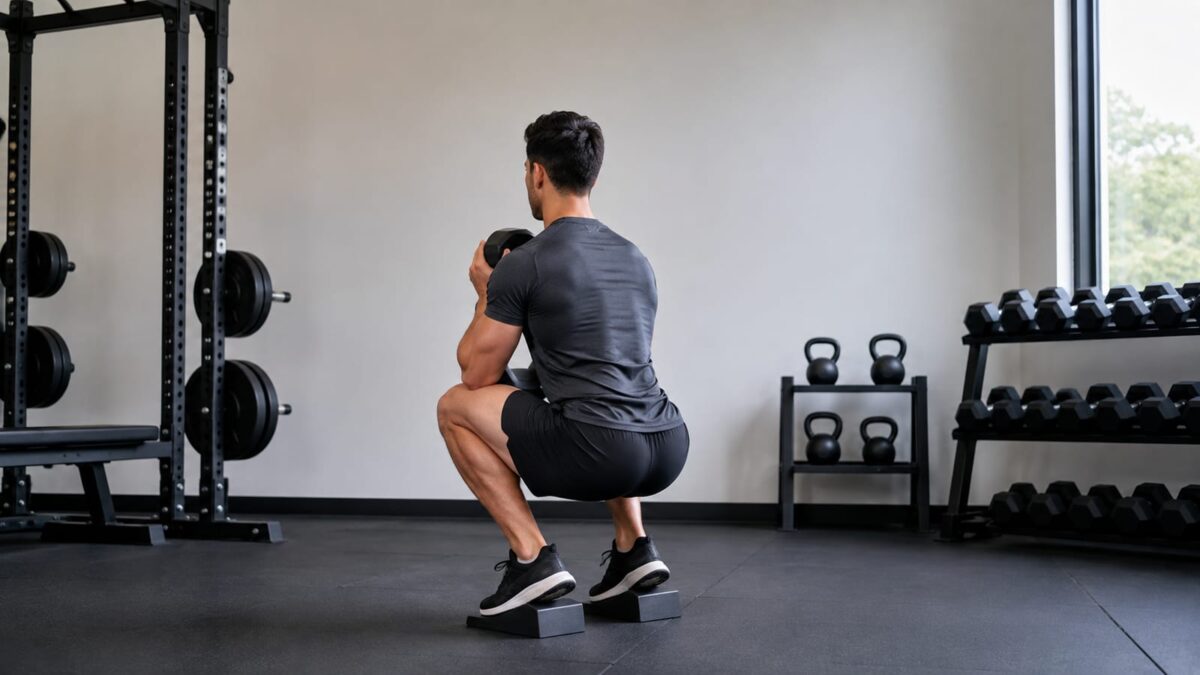
This is the best simple home movement for loading knee flexion and training the quads without gimmicks. Hold a dumbbell, kettlebell, or loaded backpack at your chest. Place your heels on a small wedge or firm platform if that helps you keep your torso upright.
Let your knees travel forward as you descend. Keep your feet planted and reach the deepest position you can control without your pelvis tucking hard or your knees losing their path.
Use 3 sets of 8 to 12 reps. When all three sets reach the top of the range with clean reps left in reserve, add load or use a slower descent.
Front-foot-elevated split squat
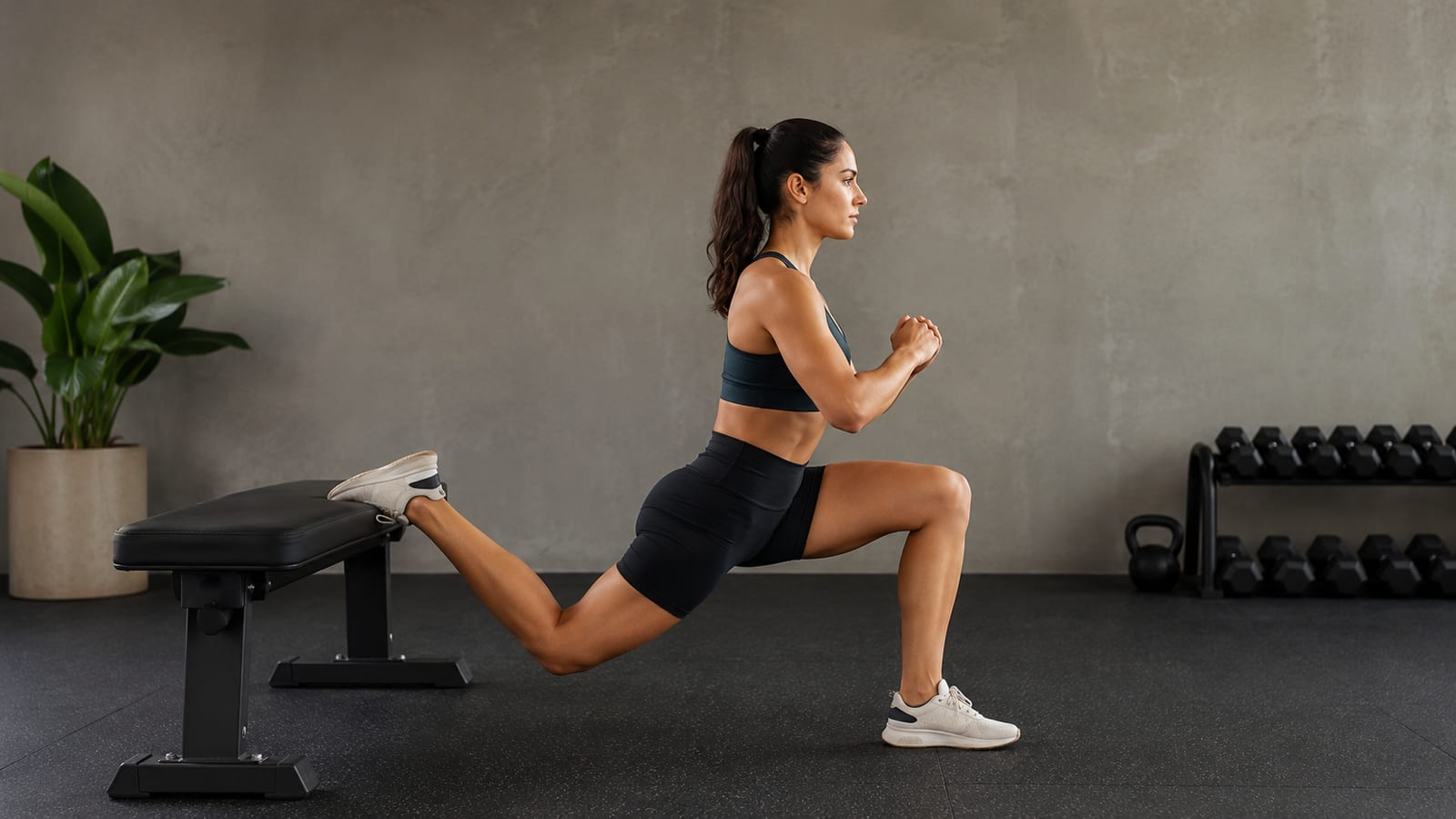
This is a top unilateral choice for deep, controlled quad loading with modest equipment. Place your front foot on a low, stable platform and take a stance that lets the front knee bend deeply without the back leg doing the work.
Keep your torso mostly upright. Allow the front knee to move forward, keep pressure through the whole foot, and lower until you reach a depth you can repeat.
Use 2 to 3 sets of 8 to 12 reps per leg. Hold dumbbells when bodyweight work becomes easy. If the elevated version irritates your knee, remove the elevation and build from the floor.
Low step-up
A low step-up works well for practical unilateral quad strength. Choose a step height that lets you place the whole foot down and drive up without jumping, twisting, or pushing hard from the trailing leg.
Keep the working knee tracking over the foot. Stand tall at the top, then lower under control. The lowering phase is part of the set.
Use 2 to 3 sets of 8 to 12 reps per leg. Raise the load before raising the step. A taller box is not automatically better. If the step turns every rep into a balance problem, lower it.
Reverse Nordic
The reverse Nordic is a useful bodyweight quad finisher. Kneel with your hips extended, brace your trunk, and slowly lean back while keeping the line from your knees through your hips controlled.
Use a range that keeps tension in the quads without forcing the knees into a painful position. Return to the start with control instead of folding at the hips.
Perform 2 sets of 6 to 12 reps after your main work. It should complement progressively loaded basics, not replace them. Add a small range of motion or slower control before trying to make the movement more dramatic.
Leg extension
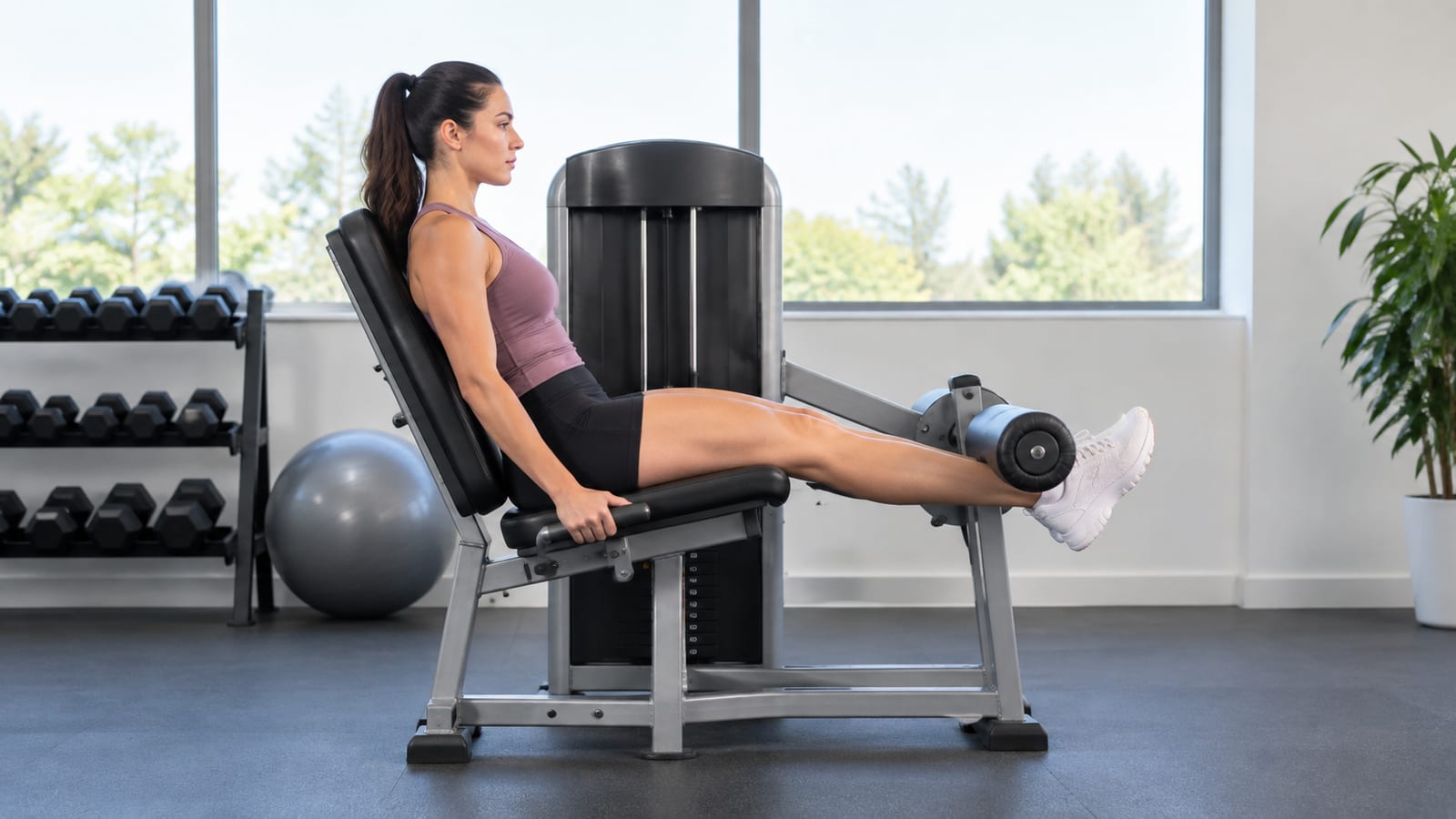
The leg extension is the most direct vastus lateralis-focused option when a machine or resistance-band setup is available. It removes balance and lower-back fatigue, so the quads can stay responsible for the set.
Use 2 to 3 sets of 10 to 20 reps. Lower under control, pause briefly near the top if your knees tolerate it, and stop when the next rep would change your technique.
A peer-reviewed electromyography study found that the leg press produced the highest vastus lateralis activation among the tested quadriceps exercises. The leg press showed 17.6% higher vastus lateralis electromyography amplitude than the knee extension in that study.
That finding is useful, but activation readings don’t settle the growth question. The best direct exercise is the one that lets you train the quads hard, safely, and repeatedly.
The best at-home vastus lateralis workout
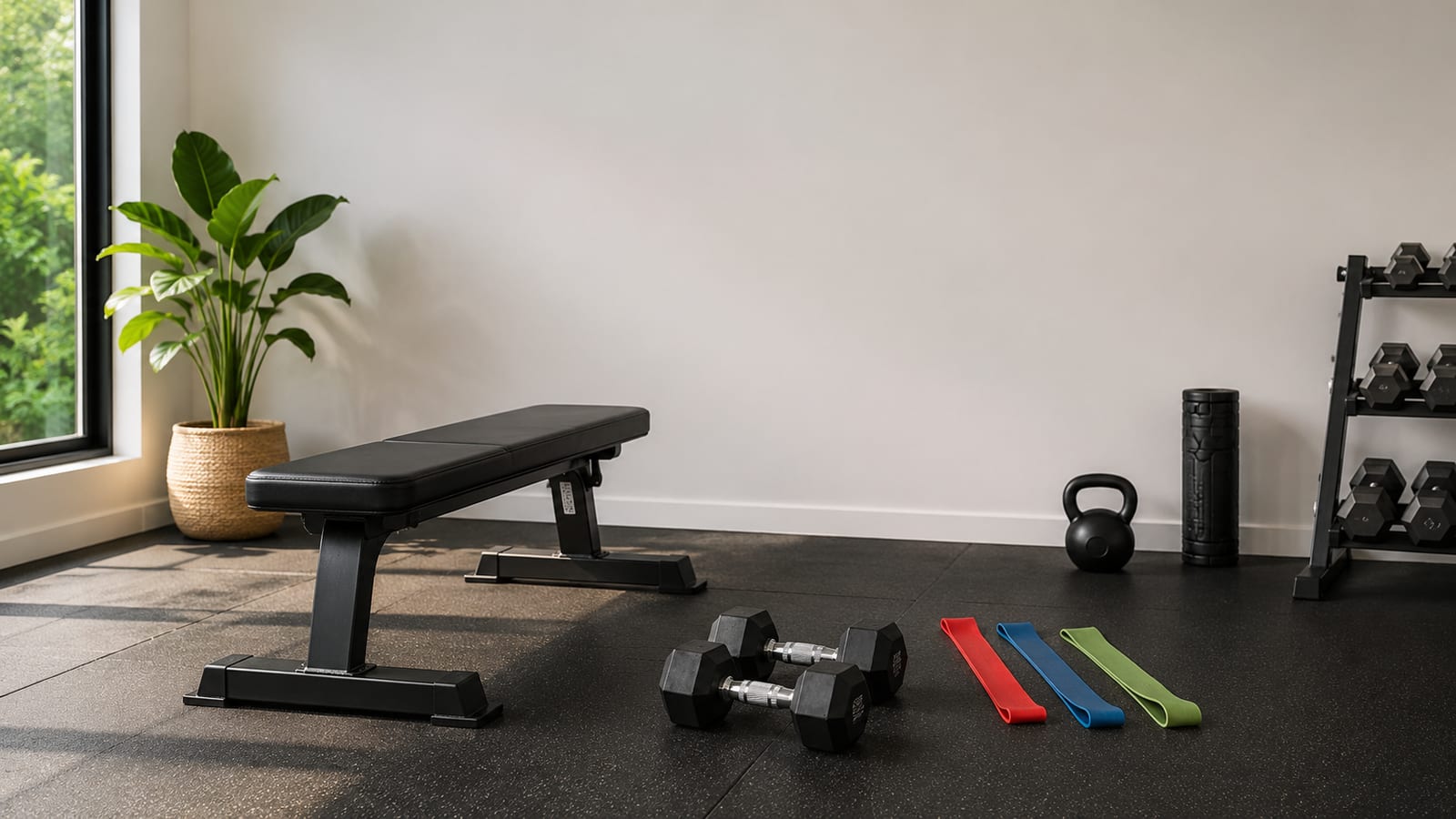
Use this routine if you have bodyweight, dumbbells, a loaded backpack, or resistance bands. Train it twice each week with a rest day between sessions.
Home workout
- Heel-elevated goblet squat: 3 sets of 8 to 12 reps
- Front-foot-elevated split squat: 2 sets of 8 to 12 reps per leg
- Low step-up: 2 sets of 8 to 12 reps per leg
- Reverse Nordic: 2 sets of 6 to 12 reps
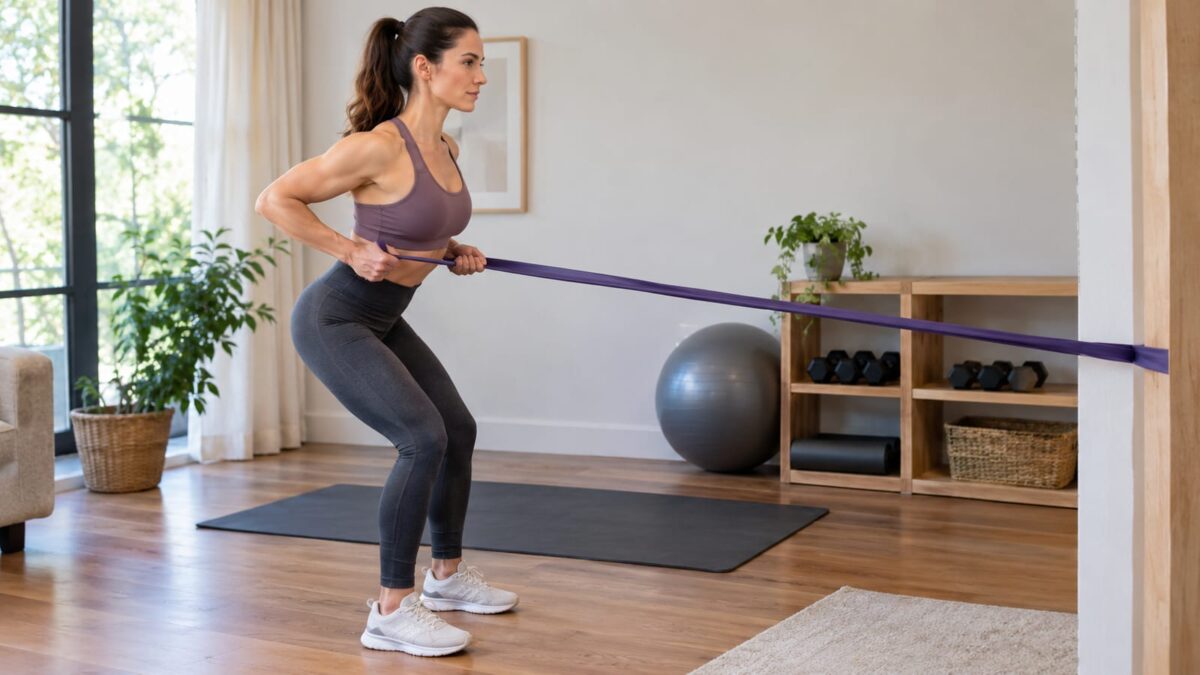
- Banded leg extension: 2 sets of 12 to 20 reps if you have a secure setup
Rest about two minutes after demanding squat and split-squat sets. Use shorter rests for reverse Nordics and band work if your technique stays consistent.
Start with 1 to 3 reps in reserve on every exercise. For the final set of banded leg extensions or reverse Nordics, you can work closer to technical failure if your knees feel normal.
Progress in this order:
- Add reps while keeping the same load.
- Add a small amount of load once you reach the top of the rep range.
- Increase range of motion if your current depth is controlled.
- Add a pause or slower lowering phase when load is limited.
- Add a set only if performance has stalled and recovery is good.
Don’t add all five forms of progression at once. Change one variable so you know what improved.
How to strengthen the vastus lateralis with squats
Start with a heel-elevated goblet squat if you train at home. The heel elevation can help you keep an upright torso while your knees bend forward. That gives the quadriceps more work without requiring a complicated setup.
Use a stance that feels stable and lets you descend smoothly. A close or moderate stance often makes it easier to keep the knees and feet aligned, but don’t force a narrow position that feels unstable.
The barbell front squat is another strong choice. It conditions the muscles of the lower extremities and places a high demand on maintaining an upright torso. Use it if you can keep the bar secure and your depth consistent.
The leg press is useful if you train in a gym. Keep your feet lower on the platform if that gives you more knee flexion without your hips rolling off the pad. Lower the sled only as far as you can keep your pelvis and back position stable.
Squat depth should serve your training. Go deeper when you can keep control, but don’t chase depth by collapsing at the bottom. A slightly shorter range that you can progress will beat a deep rep that changes every set.
Use 3 working sets of 5 to 10 reps for a heavier squat pattern, or 8 to 15 reps for goblet squats and leg presses. Keep 1 to 3 reps in reserve and earn the next increase in your logbook.
Lunges, split squats, and step-ups for outer-quad strength
Single-leg exercises train the quads while exposing differences between sides. They also use less absolute load than bilateral squats, which can help you challenge the legs without adding as much spinal fatigue.
For split squats, keep the front foot flat and let the front knee travel forward. A more upright torso shifts more work toward the front leg’s quadriceps. If you lean forward heavily, the hips take a larger share.
A longer stance can make the movement feel more hip-dominant. A shorter stance usually demands more knee bend, but your joints get a vote. Choose the position that lets the front leg work without pain or loss of balance.
Reverse lunges can be useful because the stepping leg stays in place. Stop reverse lunges if you feel knee discomfort. Use split squats instead if the step-back pattern feels unstable or painful.
For step-ups, start with a low step. Push through the working foot and avoid using the trailing leg to bounce onto the platform. Lower slowly enough to keep your knee tracking over the foot.
Use 2 to 3 sets per leg. If you can’t keep the same foot pressure and torso position, reduce the load or step height. Productive sets require stable enough technique to tell which leg did the work.
Vastus lateralis muscle workout programming
Most lifters can start with 8 to 12 hard quad sets each week. Beginners may grow on 6 to 10 weekly sets, while experienced lifters may need 10 to 16 for a stubborn muscle.
Count the real training effect of each set. A squat trains the quadriceps, but it doesn’t mean every direct leg-extension set is unnecessary. Still, you don’t need to count every overlapping movement as full work for every muscle.
A time-efficient two-day plan works well for a natural lifter with limited time.
Day 1
- Heel-elevated squat: 3 sets of 6 to 12 reps
- Front-foot-elevated split squat: 2 sets of 8 to 12 reps per leg
- Leg extension: 2 sets of 10 to 20 reps
Day 2
- Leg press or goblet squat: 3 sets of 8 to 15 reps
- Low step-up: 2 sets of 8 to 12 reps per leg
- Reverse Nordic: 2 sets of 6 to 12 reps
This gives you 14 working sets if you perform every listed set. That sits within a useful range for many trained lifters, but you can remove a set if your performance drops across the week.
Run the same plan long enough to measure it. Add reps first, then load. If your sleep, food, effort, and technique are already in order and your performance has stalled for several weeks, add a small amount of volume.
A flexible upper-lower split can also fit this work into four weekly sessions. However, don’t choose four days if your calendar regularly gives you three.
Technique that makes quad exercises productive
Good technique doesn’t mean every rep looks identical for every person. It means your chosen range and position stay stable enough to train the target muscle and track progress.
Use these checks:
- Knee tracking: Let the knee follow the line of the foot. Don’t force it inward or outward.
- Foot pressure: Keep pressure through the whole foot. Don’t let the heel lift or the arch collapse.
- Range of motion: Use the deepest range you can control without pain or a major position change.
- Torso position: Stay upright when you want more quad demand, but don’t force a rigid torso at the cost of balance.
- Tempo: Lower with control. Don’t bounce through the bottom to escape the hardest part.
- Stability: Use a support for split squats or step-ups if balance limits the quads.
- Pain signals: Muscle fatigue and effort are expected. Sharp, worsening, or persistent joint pain requires a change.
The old rule that your knees must never pass your toes has no place here. Forward knee travel is normal and often necessary for useful quad training. Increase it gradually if you’re not used to it.
If one side shifts, twists, or collapses before the other, reduce the load. Good reps come before more weight.
What does a vastus lateralis stretch actually do?
A vastus lateralis stretch lengthens the quadriceps group for a short time. It may make the front or outside of your thigh feel less tight, but it won’t build the muscle or strengthen the knee by itself.
The vastus lateralis crosses only the knee. Bending the knee lengthens it, while keeping the hip position controlled can change how much stretch you feel across the quadriceps.
Use stretching after training or on an easier day if it improves comfort. Before heavy squats, use easy movement and warm-up sets instead of long static holds that leave you feeling loose and slow.
The AAOS Knee Conditioning Program gives a standing quadriceps stretch hold of 30 to 60 seconds. A separate quadriceps stretching program involving the vastus lateralis used 3 sets on both lower limbs, 3 times weekly on 3 separate days, for seven weeks.
That stretching setup may improve flexibility, but flexibility is only one part of useful knee function. Keep strength work in the plan.
Vastus lateralis muscle stretch and practical options
You can stretch the vastus lateralis as part of the full quadriceps group. You cannot pull only one quadriceps head into a perfectly separate stretch.
Standing quadriceps stretch
- Stand tall and hold a wall or sturdy support.
- Bend one knee and hold the ankle behind you.
- Pull the heel toward the glute without twisting the hip.
- Keep the knees close and the hips facing forward.
- Hold for 30 to 60 seconds.
- Repeat on the other leg.
Slightly bend the leg planted on the ground to increase the stretch. Stop if you feel pressure or pain in the knee instead of a firm stretch through the thigh.
Side-lying quad stretch
Lie on your side with the lower leg bent for balance. Hold the upper ankle and pull it gently toward the glute while keeping the upper hip stacked.
This version removes the balance demand from standing. It’s useful after training or on a day when standing stretches feel awkward.
Reverse-Nordic-style stretch
Kneel with your hips extended and your trunk tall. Slowly move your hips forward and lean back from the knees while keeping your body controlled.
Use your hands or shorten the range if needed. This can create a strong quad stretch, so it doesn’t belong in a rushed warm-up before heavy leg work.
Stretching is useful when it helps you move comfortably. It’s a poor substitute for progressive strengthening.
How to progress without irritating your knees
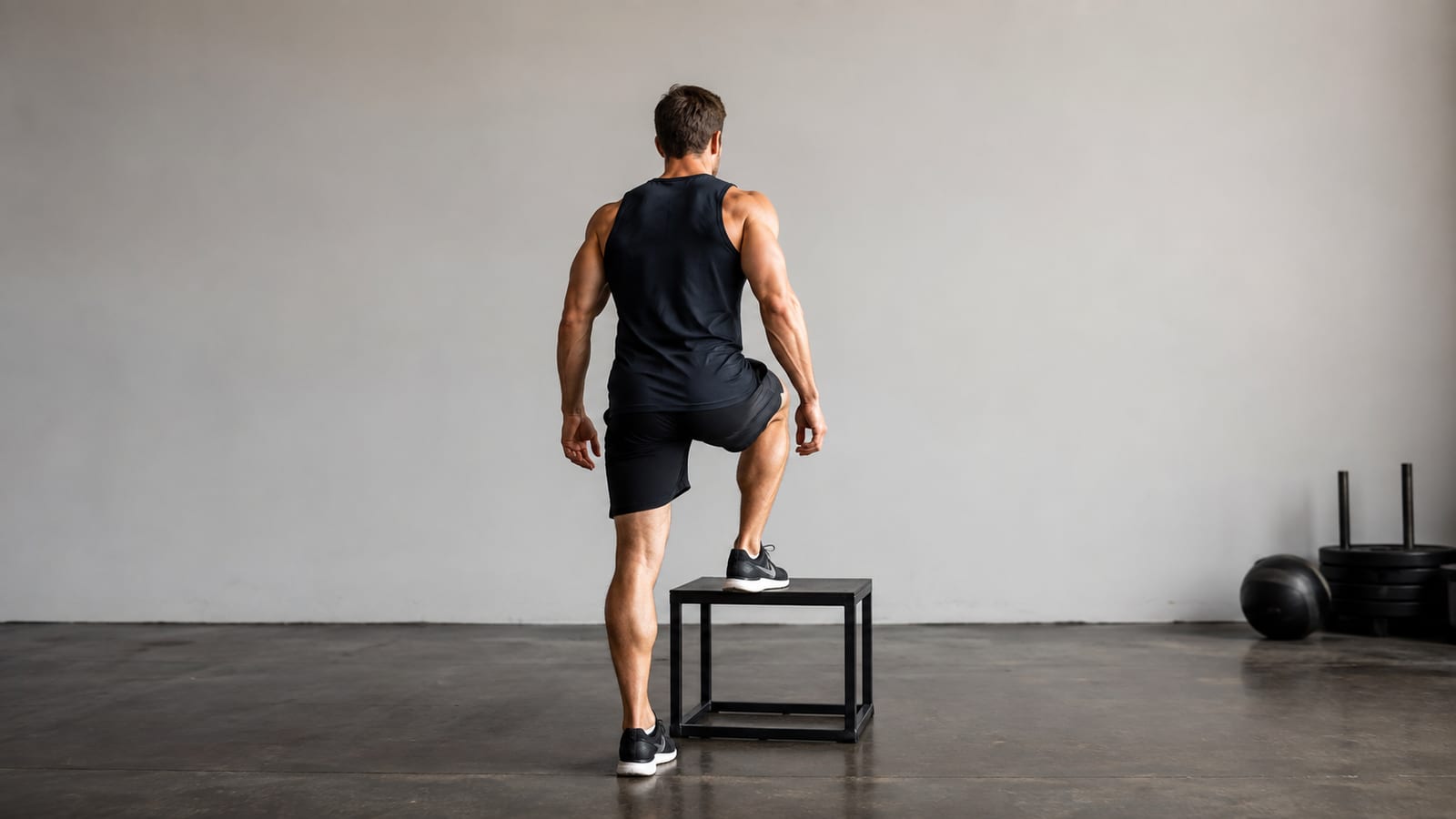
Load is rarely the only problem. Sudden jumps, poor control, excessive fatigue, and a range your joints aren’t ready to repeat can all create trouble.
Use this progression ladder:
- Reduce the load. Return to bodyweight, a lighter dumbbell, or a supported variation.
- Shorten the range slightly. Work in the pain-free range you can control.
- Raise the reps. Use a lighter load and stop farther from failure.
- Restore depth gradually. Add range after the current position feels stable.
- Add load last. Increase only when your reps remain consistent.
For example, replace a deep loaded split squat with a supported split squat. Replace a heavy squat with a heel-elevated goblet squat. Use a lower step if step-ups make you twist or push from the trailing leg.
Mild muscle soreness isn’t a reason to cancel the next session. Sharp pain, worsening discomfort, swelling, or pain that remains persistent means you should stop that movement and seek appropriate medical advice.
If the knee feels worse the next day, reduce the range, load, or total sets. The plan has to let you train again.
A simple weekly plan for measurable outer-quad progress
Train your outer quad twice each week with at least one recovery day between sessions. Monday and Thursday work well, but use the days your week can keep.
Monday: heavier quad focus
- Heel-elevated goblet squat or front squat: 3 sets of 6 to 12 reps
- Front-foot-elevated split squat: 2 sets of 8 to 12 reps per leg
- Leg extension: 2 sets of 10 to 20 reps
Thursday: stable unilateral focus
- Leg press or goblet squat: 3 sets of 8 to 15 reps
- Low step-up: 2 sets of 8 to 12 reps per leg
- Reverse Nordic: 2 sets of 6 to 12 reps
Keep most sets at 1 to 3 reps in reserve. Take the final set of leg extensions or reverse Nordics closer to failure only if your technique and knees remain steady.
Record the load, reps, and any changes to range of motion. Stay with the same exercise until you can beat the logbook without changing the movement.
Eat enough protein and total food to support the result. A small calorie surplus helps if gaining quad size is the priority, while poor sleep and inconsistent meals make hard training harder to recover from.
Start with the lowest amount of work that lets you progress. Add volume only when performance has stalled and recovery is still good. Small increases add up when you can repeat them for months.
FAQ
Can you target the outer quad with toes-in squats?
No reliable training advantage comes from forcing your toes inward. Use the foot angle that gives you stable contact, comfortable knee tracking, and repeatable depth.
Should you train the vastus lateralis every day?
No. Daily quad work usually makes it harder to recover and measure progress. Two focused sessions each week are enough for most lifters to start.
Are reverse Nordics safe for sensitive knees?
They can be useful, but they aren’t automatically suitable for every knee. Start with a short range, use support, and stop if the movement creates sharp or worsening pain.
Can stretching fix an outer-knee problem?
Stretching may reduce a feeling of tightness, but it doesn’t diagnose or fix every source of outer-knee pain. Persistent or worsening symptoms need proper assessment.
What should you do if one quad is stronger?
Start unilateral work with the weaker side and match that side’s reps on the stronger side. Don’t add extra fatigue blindly. Improve control first, then let the weaker side earn more load.
Related on this blog
Related: The Best Dumbbell Leg Workout: 4 Moves, Sets and Reps