How to Choose Squat Assistance for Weak Points

 0
0
 0
0 Random leg work is usually wasted fatigue. To select squat assistance exercises, use paused squats, front squats, belt squats, split squats, good mornings, or Romanian deadlifts to fix a clear weakness in your squat. Pick the movement that matches the problem, add a small amount of productive work, and track whether your squat improves. Keep it only if it earns its place.
Last updated: 2026-08-23
Assistance work should support your squat, not bury it. Keep the main squat in your program unless pain, equipment, or a coaching decision gives you a sound reason to replace it.
How do you access squat assistance exercises?
Squat assistance exercises are movements used to improve a specific part of your squat. They can build the quads, glutes, hamstrings, trunk, or single-leg control needed for stronger, cleaner reps.
Some are close squat variations, such as front squats and box squats. Others train supporting muscles through a different pattern, such as good mornings, belt squats, and split squats.
An exercise earns its place when it improves your squat or builds muscle you need. If it only makes your leg day longer, skip it.
Who should use assistance work?
Assistance exercises suit lifters who already squat with repeatable technique but have a clear weakness. They also help beginners build the muscles and control needed to learn the movement.
Use them if you:
- Lose balance in the same part of each rep
- Struggle to stand from the bottom
- Fold forward as the weight gets hard
- Need more quad, glute, or hamstring work
- Cannot tolerate more heavy back squatting
- Have limited equipment and need another way to train your legs
Beginners should keep the selection simple. The American College of Sports Medicine recommends resistance training 2–3 days per week for novice adults. That gives you enough practice without forcing every squat variation into the same week.
Experienced lifters can use more specialized choices. However, specialization only helps when you know what you’re trying to fix.
Match the exercise to the problem
Start with video from a normal working set. Watch where the rep slows, where your position changes, and whether the same error appears across several sessions.
Then match the exercise to the actual problem.
| What happens in your squat | Likely training need | Assistance exercise to consider | Main trade-off |
|---|---|---|---|
| You struggle to leave the bottom | More quad strength or control at depth | Paused squat or front squat | Uses lighter loads and can expose mobility limits |
| Your hips rise before your chest | Stronger quads or better torso control | Front squat or belt squat | Front squats can be limited by the rack position |
| You fold forward near the middle | Stronger trunk, glutes, and spinal erectors | Good morning | Poor loading judgment can turn it into a sloppy back exercise |
| You lose tension before sitting back | Better control and positioning | Box squat | Rocking on the box removes the work you wanted |
| One leg shifts or collapses | Better single-leg strength and control | Split squat or single-leg squat | Balance may limit the target muscles at first |
| Your legs need more work but your back is tired | More lower-body volume with less spinal loading | Belt squat or leg press | Machine setup changes the movement and may not suit everyone |
| You slow near lockout | More hip extension strength | Romanian deadlift or good morning | Extra hinge work can clash with deadlift recovery |
Do not diagnose every hard rep as a weak point. Heavy squats slow down. Look for a repeated breakdown, not one ugly grinder after a poor night’s sleep.
If balance is the main issue, fix your stability under load before adding more weight. A stronger wobble is still a wobble.
The best squat variations
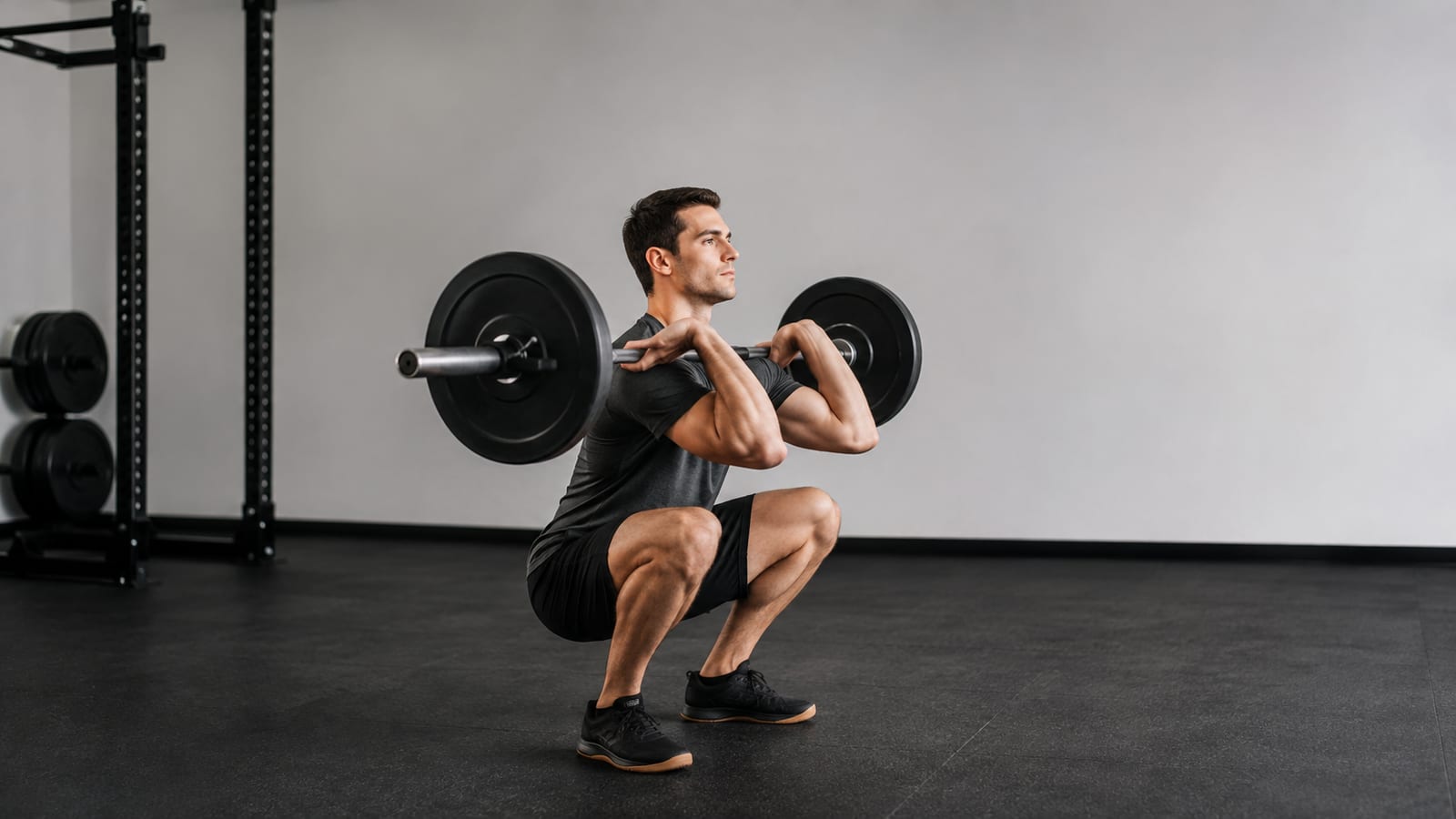
The best assistance variation is the one that stays close enough to your squat problem while remaining recoverable. Familiarity matters because you need repeatable technique to judge progress.
Front squats for quads and torso control
Front squats place the load in front of your body. That position demands an upright torso and gives the quads plenty of work.
Keep them if your back squat turns into a good morning or you need more quad training. Skip them if wrist, shoulder, or upper-back limits stop your legs from working hard.
A front squat is not automatically superior because it feels harder. Use it when its limit matches the result you need.
Box squats for position and control
A box gives you a consistent depth target and teaches you to stay controlled while sitting back. It can help lifters who rush the descent or lose tension near the bottom.
However, the box is not a chair. Do not crash onto it, rock backward, and throw yourself up. That removes tension and changes the movement into something your normal squat does not need.
Use a controlled touch or brief stop while keeping your feet planted and torso braced. This box squat guide covers the setup in more detail.
Paused squats for strength from the bottom
Paused squats remove the easy bounce out of the bottom. They make you hold position, stay braced, and produce force without rushing.
They suit lifters who lose tension at depth or panic when the bar stops moving quickly. Still, use a load you can control. A pause followed by a collapsed chest is not a quality rep.
If your depth changes from set to set, settle that first. Use this guide to find a repeatable squat depth that fits your build and control.
Build the needed muscles without another squat
You do not need every assistance exercise to resemble a squat. Sometimes the right move is a stable exercise that lets a weak muscle work hard.
Belt squats and leg presses for more leg work
Belt squats load the lower body through a belt around your hips. Leg presses support your torso while your legs move the platform.
Both can add hard quad and glute work when your back already has enough loading. They are useful after squats or during a phase when spinal fatigue is limiting your leg training.
However, neither machine reproduces the balance or bracing demands of a barbell squat. Use them to build the engine, then keep practising the skill.
Good mornings for the posterior chain
Good mornings train the hip hinge, spinal erectors, glutes, and hamstrings. The posterior chain means the muscles along the back of your hips and legs.
Keep them if you fold forward under load and can hinge without losing your brace. Start conservatively because loading them like an ego lift usually creates fatigue faster than useful strength.
Your hips should move back while your torso stays rigid. Stop the range when you can no longer hold that position.
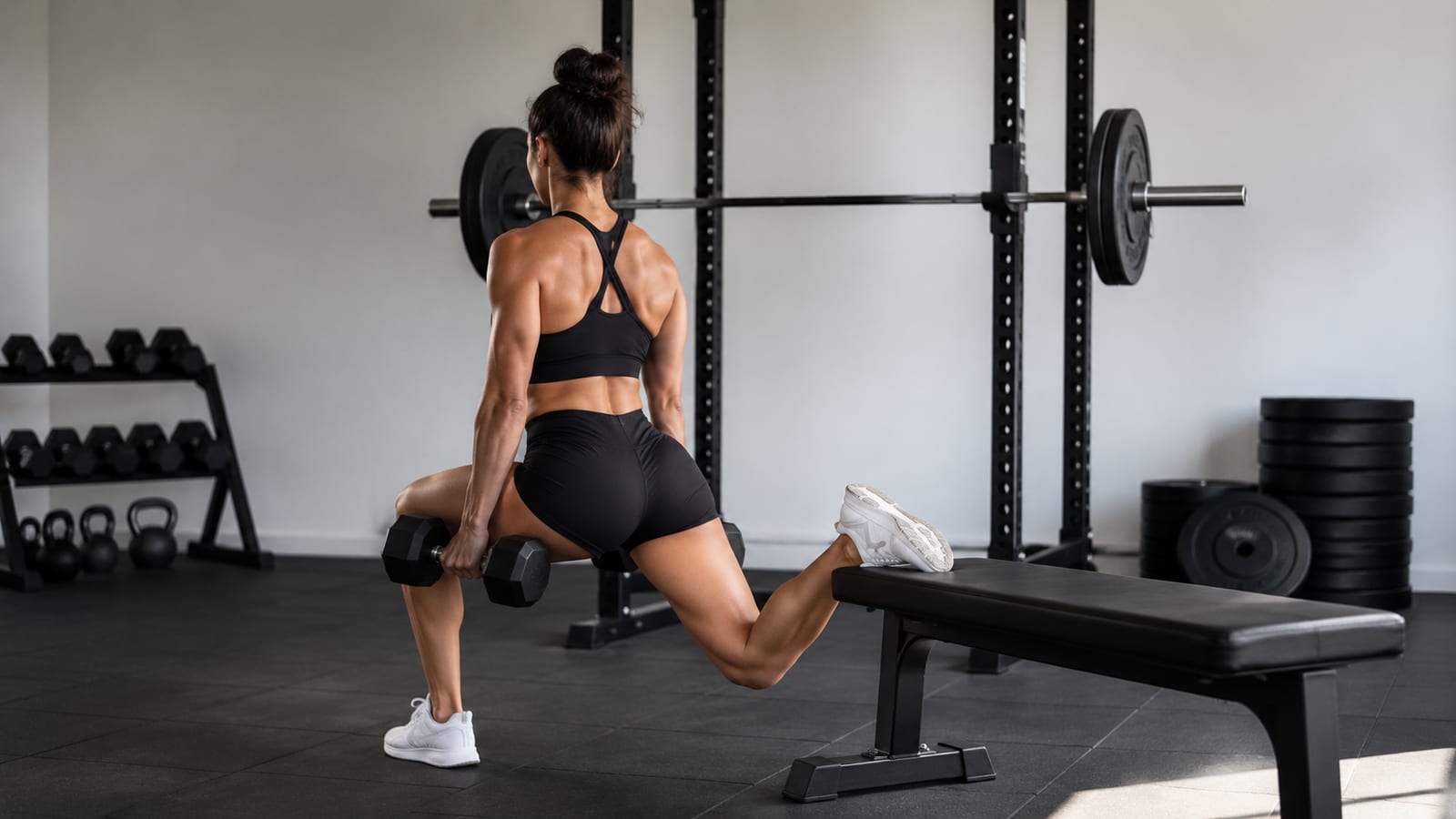
Split squats and single-leg squats for side-to-side weakness
Split squats let each leg work with less help from the other side. They can expose weak hips, poor knee control, and strength differences hidden by a barbell squat.
Balance may be the first limit. If so, hold a stable support and let the working leg train with intent. Turning the exercise into a balance contest wastes the reason you chose it.
Use these single-leg squat form cues if your knee or pelvis drifts as the set gets hard.
Match the lift to the sticking point
A sticking point is the part of the lift where the bar slows most. It gives you a clue, but it does not hand you a perfect diagnosis.
Weak from the bottom
Use paused squats, front squats, or controlled leg presses. These choices build force from deep knee bend without relying on a fast rebound.
Also check your brace and depth. More quad work will not fix a loose setup.
Folding through the middle
Use front squats, good mornings, or Romanian deadlifts. Meanwhile, lower the main squat load enough to practise keeping your chest and hips together.
Do not assume your lower back is weak. Sometimes your quads cannot keep up, so your body shifts work toward the hips.
Unstable or shifting sideways
Use split squats, step-ups, or supported single-leg squats. Keep the load modest enough to control your foot, knee, and pelvis.
Also inspect your stance. If every rep twists because your setup changes, more accessory work is not the first fix.
Slow near the top
Use hip-dominant work such as Romanian deadlifts or good mornings. However, make sure the slowdown is not just leftover fatigue from the bottom.
Film the rep from a useful angle. Your memory under a heavy bar is a poor movement analysis tool.
Program assistance around the main squat
Place your main squat first while you’re fresh. Then perform the assistance movement that addresses your biggest current need.
A simple session can follow this order:
- Main squat variation
- Primary assistance exercise for the sticking point
- Stable leg exercise for more muscle work
- Optional hamstring, calf, or trunk exercise
Keep assistance volume low enough that your next squat session still has quality reps. Finish most sets with clean reps in reserve, meaning you could complete more reps without your technique breaking.
Add weight or reps only when the movement stays repeatable. If the exercise rises in the logbook while your squat gets worse, the assistance plan is failing its job.
Does the conjugate method change exercise selection?
The conjugate method rotates related lifts to develop different strength qualities. A lifter might cycle squat variations, use box squats, and train speed or force production on separate days.
This approach can work for experienced strength athletes. However, frequent rotation makes progress harder to read if you have not yet built stable technique.
Most natural lifters do not need a large menu of specialty movements. Keep an assistance lift long enough to improve it, then judge whether that improvement carries over to your squat.
Rotation should solve accommodation or overuse. It should not protect you from ever repeating an exercise long enough to get better.
The trade-offs
More exercise choice is not free. Every added movement costs time, recovery, and attention.
| Choice | What you gain | What you give up |
|---|---|---|
| Close squat variation | Strong carryover to squat skill | More fatigue from similar loading |
| Machine exercise | Stable muscle work with less balance demand | Less practice bracing under a bar |
| Hip hinge | Stronger glutes, hamstrings, and back | More fatigue that may affect deadlifts |
| Single-leg work | Better control and side-to-side development | More setup time and balance demand |
| Frequent exercise rotation | Variety and less repeated joint stress | Harder progress tracking |
| Minimal assistance work | Better recovery and clearer feedback | Less direct work for stubborn muscles |
Your joints get a vote. If a useful exercise repeatedly causes pain despite sensible setup and loading, choose another movement that trains the same need.
Assistance work can also hide poor squat programming. If your main work is too heavy, inconsistent, or technically loose, adding more exercises only gives you more ways to stay tired.
Judge the exercise by carryover
Judge the exercise by squat performance, not soreness. Look for cleaner reps, better control at the weak point, and steady progress without a recovery drop.
Keep it when:
- You can add weight or reps with the same technique
- Your target muscle is doing the work
- Your squat position improves
- Your normal training feels recoverable
- Your joints tolerate the movement
Change it when technique stays awkward, pain persists, or your squat has not improved after a fair run. First check sleep, food, effort, and main-lift programming. Assistance exercises cannot rescue a week that never fit your life.
The standard is simple on paper and demanding in practice: make every set serve a purpose. Small increases add up only when you can recover and come back stronger.
FAQ
Should squat assistance exercises make me sore?
Some soreness can occur after a new movement, but it is not the goal. Judge the exercise by performance, control, and recovery. Severe soreness that ruins your next lower-body session means the dose was too high.
Can I use bodyweight assistance exercises at home?
Yes. Split squats, step-ups, controlled squat pauses, and supported single-leg squats can build useful strength without machines. Progress them through better control, more range, extra reps, or added resistance.
Should I wear a lifting belt for assistance exercises?
Use a belt if it helps you brace and the exercise is heavy enough to justify it. However, do not wear one to hide poor trunk control. Your setup should remain stable with or without extra support.
What should I do if an assistance exercise causes knee pain?
Stop forcing the painful version. Adjust the stance, range, load, or exercise choice, then check whether symptoms settle. Seek a qualified medical assessment if pain persists, worsens, or affects normal daily movement.
Can assistance work improve my squat without increasing muscle size?
Yes. Better bracing, balance, positioning, and force production can improve the lift without a large change in muscle size. However, building more quad, glute, or hamstring tissue often helps when muscular strength is the main limit.