
A Practical Method to Correct Muscle Imbalances

 0
0
 0
0 Fix the movement first, then build the weaker side with controlled unilateral work. To conquer muscle imbalances with expert tips that hold up in the gym, compare both sides under the same conditions, start each exercise with the weaker side, and match its clean reps on the stronger side. Don’t chase perfect symmetry. Build strength, range of motion, and control that carry into training without pain or compensation.
Last updated: 2026-08-10
What is a muscle imbalance?
A muscle imbalance is a meaningful difference in strength, mobility, size, or control between muscles that should share a task. It can occur between your left and right sides or between opposing muscle groups.
Small differences are normal. Your dominant arm may be stronger, and one calf may be larger. That alone does not need a correction plan.
The problem starts when the difference changes how you move. For example, one knee may collapse during a squat, one shoulder may rise during a press, or one hip may shift under load. Those compensations can limit performance and irritate joints or tendons.
Posture alone does not prove an imbalance. A photo of uneven shoulders tells you less than a controlled row, press, squat, or step-up performed under consistent conditions.
The expert process for conquering muscle imbalances
Start with one-sided exercises, repeatable technique, and a logbook. Train the weaker side first, then let that side set the load and rep limit for the stronger side.
Use this process:
- Choose a movement you can control. Use a split squat, step-up, single-leg press, one-arm row, or one-arm cable press.
- Keep the setup identical. Match the seat position, stance, grip, range of motion, and tempo.
- Start with the weaker side. Fatigue should not decide which side gets the better work.
- Stop when technique changes. Leave good reps in reserve rather than grinding through a shifted or shortened rep.
- Match that work on the stronger side. Don’t give the stronger side extra reps because it can do them.
- Record the result. Track load, reps, range, and any visible compensation.
- Earn the next increase. Add weight or reps only after the weaker side completes the target with repeatable technique.
This approach is simple on paper and demanding in practice. However, it gives you a clean comparison and makes every set serve a purpose.
Signs that point to a real imbalance
Look for patterns that repeat across several sessions. One rough set after poor sleep proves nothing.
Useful signs include:
- One side consistently produces fewer quality reps with the same load
- One limb uses a shorter range of motion
- Your torso rotates or shifts during one-sided work
- One knee repeatedly moves inward or outward
- One shoulder rises, rolls forward, or loses position under load
- One side tires much sooner
- A joint or tendon becomes irritated on the same side
- The stronger side takes over during bilateral exercises
- One muscle has a clear size difference alongside a strength or control difference
Pain deserves more caution. It does not automatically mean one muscle is weak or another is “tight.” Pain can change how you recruit muscles, so the apparent imbalance may be a response to the problem rather than its cause.
Skip home strength testing if a movement causes sharp pain, numbness, sudden weakness, or loss of coordination. Get assessed by a qualified clinician instead of trying to train through it.
Common causes and habits that create imbalances
Repeated habits are the common cause. You may carry a child on one hip, use the same hand for physical work, play a one-sided sport, or train around an old injury.
Long periods of sitting can also reduce how often you use certain ranges and muscles. The World Health Organization projects that adult physical inactivity could rise to 35% by 2030 if the trend continues. That does not prove sitting caused your specific imbalance, but it shows why regular movement matters.
Still, sitting does not automatically create a named syndrome. That claim gets sold too easily. The useful question is whether your current habits have reduced strength, movement options, or tolerance in a way that affects training.
Other common causes include:
- Returning to training before an injury has fully settled
- Favoring one side during squats, presses, or rows
- Using a load that is too heavy to control
- Repeating one exercise pattern while neglecting its counterpart
- Limited ankle, hip, shoulder, or upper-back mobility
- Poor equipment setup
- Structural differences in limb length or joint shape
- Sport-specific demands that favor one side
You cannot stretch away every structural difference. In those cases, adjust the exercise and build capacity around the body you have.
A practical assessment for each side
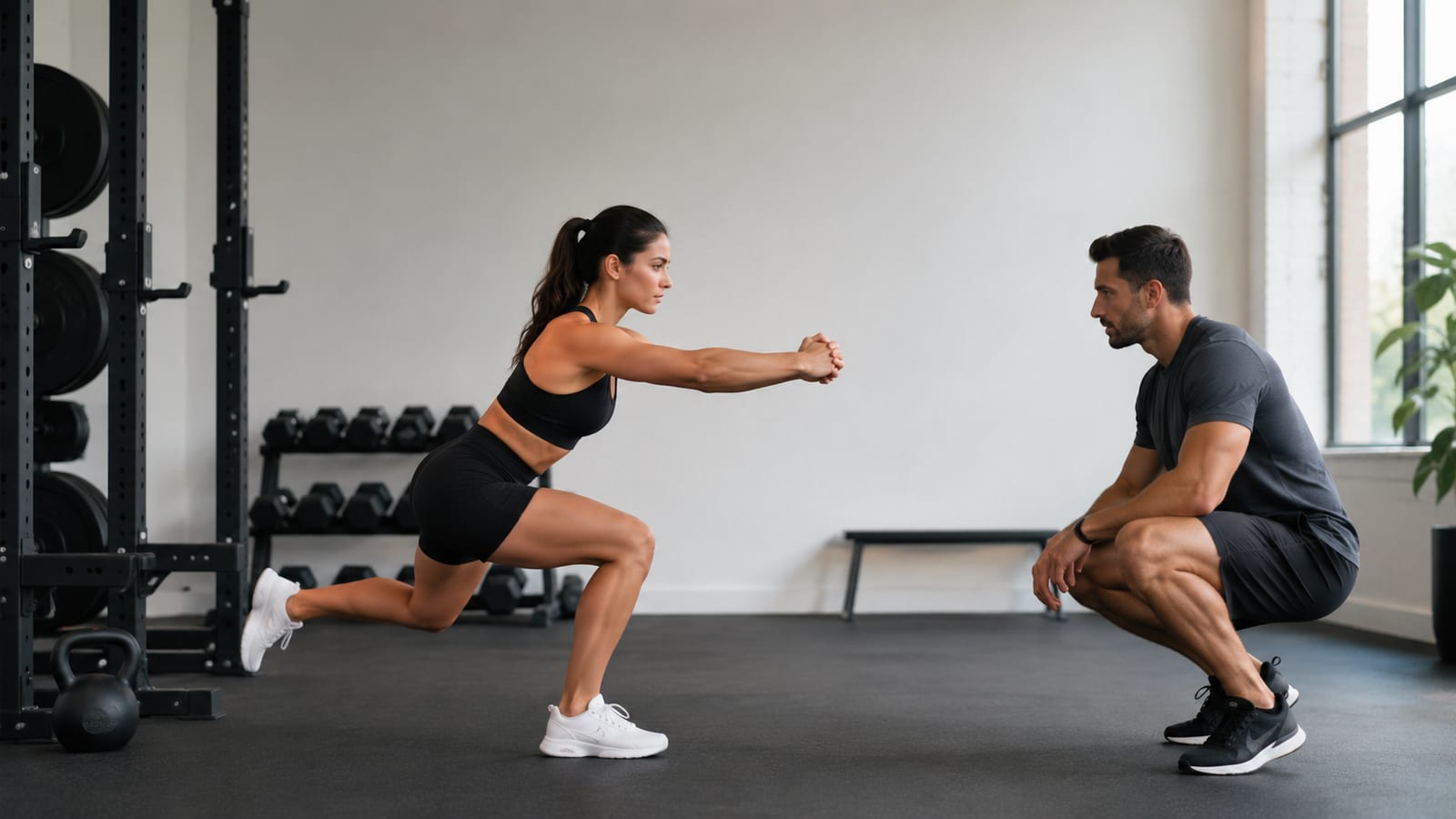
Use submaximal work, not a maximal strength test. A hard single tells you how much you can force through the movement, but it often hides the compensation you need to see.
Pick a stable one-sided exercise and use the same load on each side. Then compare the following:
| Check | What to watch | What changes your plan |
|---|---|---|
| Strength | Clean reps with the same load | One side repeatedly stops earlier |
| Range | Start and finish position | One side shortens the movement |
| Control | Wobbling, twisting, or rushing | Position breaks before the muscle tires |
| Effort | How close each side is to failure | One side works much harder |
| Symptoms | Pain, pinching, or numbness | Stop and seek assessment if needed |
| Recovery | Soreness and performance next time | One side stays irritated or declines |
Film the movement from a useful angle if you cannot feel the shift. For lower-body work, the front view shows knee and hip drift. A side view shows depth, trunk position, and whether the range changes.
For squats, use these balance and stability checks under load before blaming one muscle. Foot pressure, stance, and bar position can create a shift that looks like a strength problem.
Retest under similar conditions. Use the same exercise setup and place it at the same point in the workout. Otherwise, fatigue muddies the result.
Exercises that correct common imbalances

Pick the exercise that exposes the difference without making balance the main challenge. A supported split squat may train an uneven leg better than a wobbly movement that turns into an ankle test.
Lower-body options
Use split squats, step-ups, single-leg presses, single-leg leg curls, or supported single-leg deadlifts. These movements let each leg work without the stronger side quietly taking over.
For a split squat or unilateral squat, keep your foot pressure steady and let the knee track in line with the foot. The unilateral squat form cues matter more than forcing extra depth.
A single-leg deadlift can reveal hip rotation and poor pelvic control. However, it is easy to turn it into a balance act. Use support and follow a clear single-leg deadlift alignment setup so the hamstring and glute get productive work.
Upper-body options
Use one-arm cable rows, dumbbell rows, one-arm pulldowns, alternating dumbbell presses, and one-arm cable presses. Stable equipment helps because you can focus on the target muscle rather than fighting the bench.
Keep the shoulder blade controlled, but do not pin it into one rigid position. Your shoulder blade should move as the arm moves. Forced posture often creates more strain than it solves.
For arms and shoulders, unilateral curls, triceps extensions, and lateral raises make load matching simple. Start with the weaker side and stop the stronger side at the same number of quality reps.
Bilateral work still belongs
Do not remove every squat, press, and row from your program. Bilateral lifts build strength efficiently and show whether the correction carries over.
Perform the one-sided exercise first if the imbalance is the main training priority. Otherwise, place it after your main lift and use it as focused assistance work.
The trade-off is fatigue. Too much corrective work can reduce performance on the lifts you are trying to improve. Add the minimum effective dose, then judge the result through technique and logbook progress.
Mobility work has a specific job
Mobility work helps when one side cannot reach the position required by the exercise. It does not replace strength work, and it does not fix every uneven movement.
For example, limited ankle motion can change squat depth and shift pressure toward the other leg. A calf stretch or controlled ankle mobilization may help, but you still need to strengthen the available range.
The same rule applies to shoulders and hips. Improve the missing range, then load that range with control. Stretching without strength often produces a temporary change that disappears under load.
Foam rolling may produce a small short-term increase in range of motion without reducing muscle performance. Keep it if it helps you reach a useful position before training. Skip long rolling routines that delay the work that actually builds capacity.
Yoga can improve body awareness and expose stiff positions. However, it is not a complete imbalance program. You still need progressive resistance and measurable strength work.
The trade-offs of corrective training
Corrective training works best when it stays close to normal training. If the plan needs a collection of bands, unstable surfaces, and an hour of preparation, you probably will not keep it.
| Approach | Keep it when | Skip or adjust it when |
|---|---|---|
| Unilateral strength work | One side clearly lags in reps or control | Balance prevents meaningful loading |
| Mobility drills | A specific range is limited | Both sides already reach the needed position |
| Foam rolling | It briefly improves a useful range | It becomes the main treatment |
| Extra weak-side work | Progress remains stalled with good form | Recovery or joint comfort declines |
| Bilateral lifting | Position stays even under load | The stronger side keeps taking over |
| Professional assessment | Pain, weakness, or coordination problems persist | A small harmless difference is the only issue |
Chasing visual symmetry can waste training time. Muscle shape, tendon attachment, bone structure, and dominant-side use all affect appearance.
Your goal is dependable movement and sustainable progress. If both sides perform the task well and your joints stay calm, a small size difference may not matter.
General activity that supports the fix
Correction work is harder when the rest of your week contains little movement. Regular walking, basic aerobic work, and full-body strength training improve your general work capacity.
The World Health Organization guidance on physical activity recommends that adults complete 150–300 minutes of moderate aerobic activity per week. It also recommends muscle-strengthening activities involving major muscle groups on 2 or more days a week.
Those targets are general health guidance, not a special imbalance treatment. Still, they set a useful baseline. A few targeted drills cannot fully offset a week with little movement or strength work.
The plan has to fit your week. Keep the targeted work brief enough that you can still train the major movement patterns and recover.
When professional assessment makes sense
Get help when pain changes your movement, weakness appears suddenly, or the imbalance worsens despite sensible training. A physical therapist or qualified sports clinician can assess strength, joint motion, nerve symptoms, and the task that triggers the problem.
An assessment also makes sense after surgery or a significant injury. The weaker side may need a staged return rather than a generic exercise list.
Exercise is recommended as an initial non-drug treatment option for chronic low back pain. However, “exercise” does not mean guessing through painful deadlifts. The right starting point depends on your symptoms, tolerance, and current ability.
A coach can help with exercise setup and progression. A clinician should handle diagnosis, persistent pain, and possible nerve or joint problems. Those jobs overlap, but they are not interchangeable.
Keeping the imbalance from returning
Keep some unilateral work after the obvious gap closes. You do not need a large correction block forever, but you should keep checking the pattern that caused the problem.
Rotate daily habits where practical. Change the side used to carry bags, set up your workstation well, and avoid always standing on the same leg. These changes will not replace training, but they reduce repeated one-sided stress.
Most importantly, keep bilateral technique honest. If your squat starts shifting again, lower the load and restore the position before adding plates. Good reps before more weight.
To conquer muscle imbalances, beat the logbook without letting the stronger side hide the weaker one. Small increases add up, but only when both sides own the movement.
FAQ
Can machines help correct a muscle imbalance?
Yes. Machines are often useful because they reduce the balance demand and make the setup easier to repeat. Single-leg presses, one-arm rows, and independent-arm chest presses let you compare sides without turning the exercise into a stability drill.
Check whether the machine arms or foot platforms move independently. If both sides are mechanically linked, the stronger limb may still contribute more.
Should you use different weights for each side?
Use the same weight when both sides can perform it with clean form. This gives you a fair comparison and stops the stronger side from racing ahead.
A lighter weight may be appropriate for the weaker side if the shared load causes compensation or pain. However, build toward equal work rather than maintaining two separate standards forever.
Can an old injury cause an imbalance years later?
Yes. Pain, immobilization, and changed movement habits can reduce strength and confidence on the injured side. Even after the tissue settles, the protective pattern may remain.
Start below the level that triggers compensation. Then rebuild range, control, and strength in a way you can repeat without a symptom flare.
How long does it take to correct a muscle imbalance?
It depends on the cause. A technique problem may improve quickly, while a long-standing strength gap or injury-related limitation can take much longer.
Judge progress by cleaner reps, a fuller range of motion, less side-to-side effort difference, and better tolerance after training. Change the plan if those markers stop improving.
Should you stretch only the tighter side?
Stretch the limited side if testing shows a real range difference that affects the exercise. Do not assume every stronger or painful muscle is tight.
Then strengthen the new range. If the restriction returns as soon as you load the movement, stretching alone is not solving the problem.