
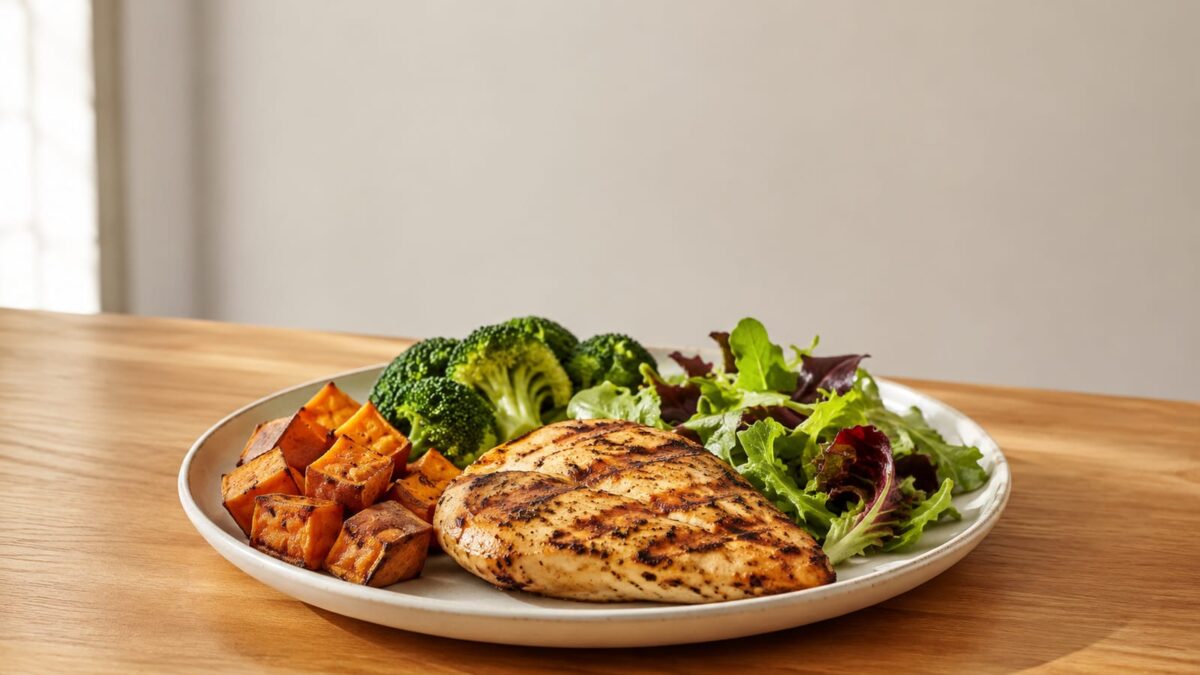
Why OMAD Is Harder Than It Looks for Fat Loss

 0
0
 0
0 Eating once a day is not an easy weight-loss strategy. The pitch that eating once a day is easy sounds tidy, but the routine is needlessly restrictive. It works only when one meal leaves you eating fewer calories overall. Meanwhile, it makes protein intake, training, recovery, and hunger harder to manage. Most busy lifters should use a modest calorie deficit and eat two or three protein-centered meals instead.
Last updated: 2026-08-10
Is eating once a day safe for weight loss?
One meal a day, often shortened to OMAD, can be tolerable for a healthy adult with low training demands. However, tolerable does not mean useful. You still need enough food, protein, fiber, vitamins, minerals, and fluid in one sitting.
Skip OMAD without medical guidance if you:
- Take medication that needs food or affects blood glucose
- Have diabetes or another condition tied to meal timing
- Are pregnant, breastfeeding, or still growing
- Have a current or past eating disorder
- Often become dizzy, weak, or unwell during long fasts
- Train hard enough that one meal cannot support performance and recovery
A strict fasting rule can also turn normal hunger into a daily test of willpower. That is a poor fit if restriction already leads you to overeat later.
The National Institute of Diabetes and Digestive and Kidney Diseases guide to safe weight loss recommends choosing a plan that suits your health, preferences, and daily life. That standard matters more than proving you can ignore lunch.
How does one meal a day trigger fat burning?
During a fast, insulin falls and your body uses more stored energy. That includes stored fat. This change is real, but it does not prove that OMAD causes greater fat loss across the full day.
You can burn more fat during the fasting period and then store more after a large meal. The result depends on total energy balance over time. If your meal replaces every calorie you skipped, the long fast has not created a meaningful deficit.
OMAD works when it helps you eat less. It fails when hunger turns one meal into an uncontrolled catch-up session.
The same logic applies to fasted cardio. Burning more fat during one workout does not guarantee more body-fat loss if your total calorie intake stays the same.
Does OMAD produce more weight loss than a normal calorie deficit?
No reliable evidence shows that OMAD beats an equal calorie deficit. Fasting changes the eating schedule. It does not remove the need to eat fewer calories than you use.
Across 40 intermittent fasting studies, participants lost about 7-11 pounds over 10 weeks. However, that result covers several fasting methods. You cannot claim the full result for OMAD alone.
Adherence was also inconsistent. Dropout rates for intermittent fasting ranged from 0-65%, and many studies lost at least 25% of participants. These rates were similar to standard calorie restriction, with no significant differences between the approaches.
A year-long study of 137 participants found that weight loss could be maintained with intermittent fasting and regular calorie restriction. However, fasting did not establish a clear advantage. Likewise, an 8-hour time-restricted eating plan did not produce greater weight loss than a daily calorie-controlled plan in a 12-month trial.
Time-restricted eating has produced 3%-5% weight loss over 2-12 months compared with control groups. That is useful if the schedule helps you eat less, but it is not evidence that longer fasting always works better.
Is eating once a day an easy weight-loss strategy?
OMAD is simple on paper and demanding in practice. You remove meal decisions, but you replace them with long hunger, one oversized feeding, and less room to correct poor food choices.
The dropout evidence matters here. Intermittent fasting is not necessarily easier to follow, and its dropout rates are not low. A plan with one rule can still be miserable.
If you enjoy large meals and rarely feel hungry earlier, OMAD may feel manageable. However, if you spend the afternoon thinking about dinner, lose focus at work, or raid the kitchen at night, the rule is working against you.
Making eating once a day easy should not require white-knuckling hunger or watching your lifts slide. The plan has to fit your week and let you recover.
Is OMAD better than other forms of intermittent fasting?
OMAD is the most restrictive common fasting setup. A broader eating window gives you more chances to eat protein, fuel training, and stop dinner from becoming a physical chore.
| Eating pattern | Main advantage | Main drawback | Coaching verdict |
|---|---|---|---|
| One meal a day | Few meal decisions | Hardest for protein distribution, training, and hunger | Skip it for most lifters |
| Time-restricted eating | Keeps a daily eating window without forcing one huge meal | Can still become restrictive | Keep it if the window fits your day |
| Alternate-day fasting | Some people prefer larger swings in intake | Hunger and training fuel can vary sharply | Use only if it feels more repeatable |
| Conventional meal timing | Easier protein distribution and workout fueling | Requires more meal planning | Best default for active adults |
Time-restricted eating is the better fasting option for most people who want structure. You can eat two or three proper meals without grazing from morning to bedtime.
Alternate-day fasting may suit someone who dislikes daily calorie tracking. Still, large changes in food intake can make training days uneven. Hard sessions rarely improve when yesterday’s intake was too low.
Conventional meal timing is less interesting to market, but it gives you more control. You can place food around training, spread protein, and adjust one meal without losing the whole day.
What are the main drawbacks of eating once a day?
The main problems are not mysterious. One meal gives you one chance to meet a full day of nutrition, and hunger makes careful choices less dependable.
Common drawbacks include:
- Strong hunger and food preoccupation
- Low energy or poor concentration
- Weaker training sessions
- Headaches, irritability, or light-headedness
- Overeating once the fast ends
- Bloating, reflux, or digestive discomfort from one large meal
- Low fruit, vegetable, fiber, or micronutrient intake
- Poor protein distribution
- Rebound eating after missed or delayed meals
- Social friction around family meals and work schedules
Some people also mistake appetite suppression for proof that the diet is healthy. Coffee, stress, and a busy morning can hide hunger for a while. They do not cover your nutrition needs.
Late evening OMAD can be especially awkward. A huge meal close to bed may disturb sleep or aggravate reflux, while an early meal can leave you hungry through the evening. There is no clever timing choice that removes the basic trade-off.
Can eating once a day harm muscle gain or muscle retention?

OMAD makes muscle gain and retention less dependable because you only get one protein feeding. Total daily protein still matters most, but spreading it across several meals gives your muscles repeated chances to use it.
Your body can digest a large serving of protein. However, digesting it does not make one meal equal to several well-spaced meals for muscle-building signals, appetite control, or workout fuel.
The problem gets worse during a calorie deficit. You already have less energy available for training and recovery. Adding a long daily fast can reduce performance before it produces any extra benefit.
Watch the logbook. If reps fall, loads stall, sleep worsens, and soreness hangs around, the deficit or meal pattern is too aggressive. Good reps before a stricter eating rule.
OMAD is a poor fit for muscle gain because gaining usually requires enough food to support steady progression. Packing that food into one sitting often becomes a digestion contest rather than a useful plan.
What should you eat if you choose OMAD anyway?
Build the meal around nutrition before taste and convenience take over. One plate of snack food can contain plenty of calories while leaving you short on protein, fiber, and micronutrients.
Use this order:
- Choose a substantial protein source. Lean meat, fish, eggs, Greek yogurt, cottage cheese, tofu, tempeh, beans, or lentils can do the job.
- Add a useful carbohydrate. Rice, potatoes, oats, whole grains, beans, or fruit can support training and refill stored carbohydrate.
- Include several vegetables. Mix colors and textures rather than relying on a token handful of leaves.
- Add fruit and a calcium-rich food. Dairy or a fortified equivalent can fill gaps that one meat-and-rice plate misses.
- Measure calorie-dense fats. Olive oil, nuts, seeds, cheese, and sauces are useful, but they are easy to pour without limit.
- Drink enough fluid. Water still matters during the fasting period, especially if you train or work in heat.
Do not build the meal around fried food, pastries, sugary drinks, and alcohol. They are easy to overeat and leave little room for foods that cover your actual needs.
However, do not force an enormous pile of lean food either. If the meal is too large to finish without discomfort, that is evidence against OMAD, not a reason to eat faster.
What does a balanced one-meal-a-day menu look like?
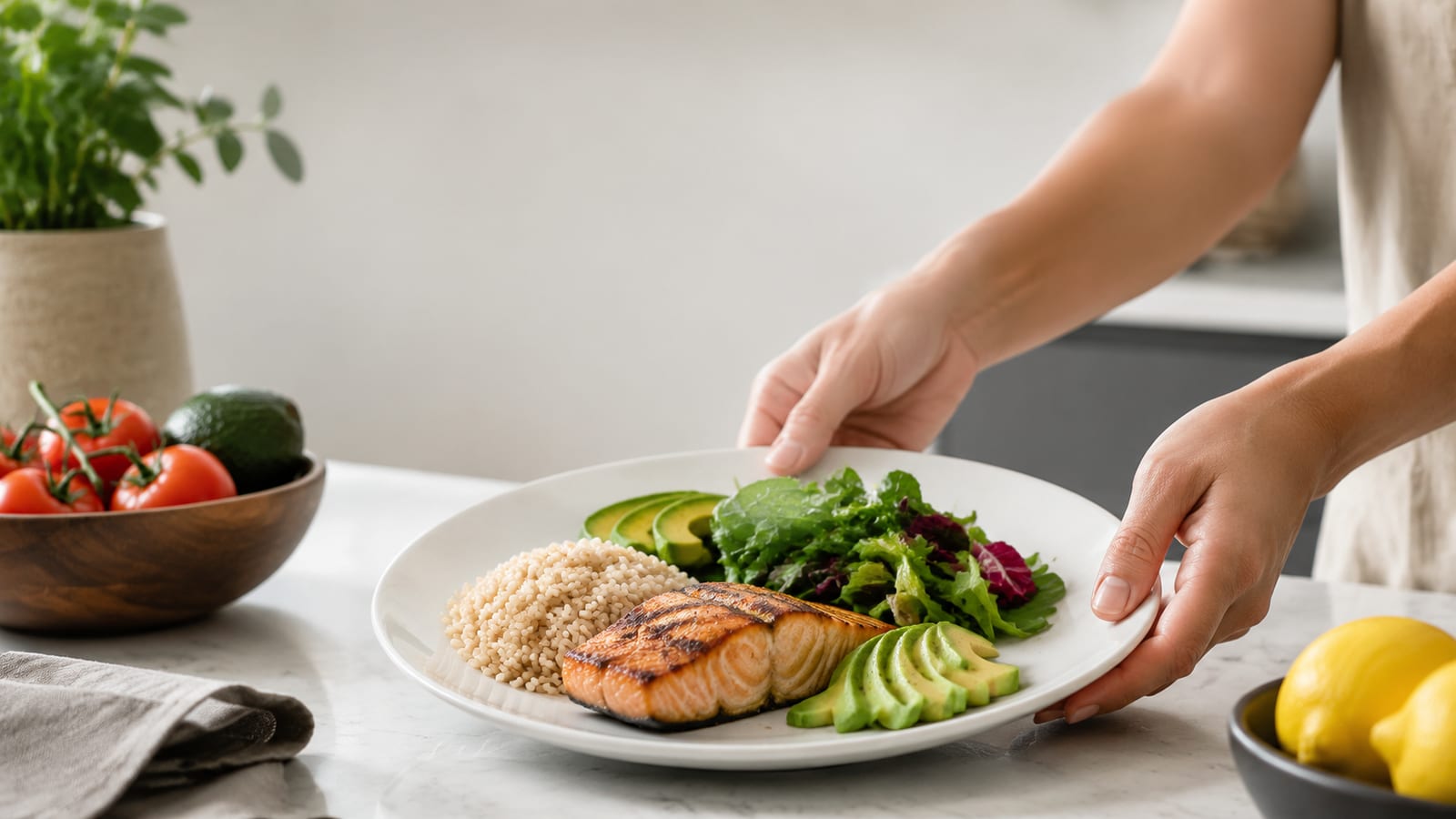
A reasonable OMAD meal needs protein, carbohydrate, produce, fats, and enough total food. For example:
- Grilled chicken breast, baked fish, or firm tofu
- Rice and lentils, or potatoes and beans
- Roasted mixed vegetables
- A large salad with a measured pour of olive oil
- Greek yogurt or a fortified soy alternative
- Berries and a banana
- Water, with salt added to food as appropriate
This menu covers more ground than one large takeaway meal. Still, it may be physically difficult to eat enough protein, produce, and energy at once.
Adjust the foods to your calorie needs, digestion, and training. To set a sensible deficit, start with the difference between basal metabolic rate and total daily energy expenditure. Do not pick the lowest intake you can endure.
If you cannot finish the meal comfortably, split it. Two complete meals beat one strained attempt to obey a fasting label.
What do studies say about OMAD and metabolic health?
Short fasting studies sometimes report improvements in glucose control, insulin sensitivity, blood pressure, blood lipids, or appetite. However, these changes often occur alongside weight loss. That makes it hard to credit meal timing alone.
Results also depend on who was studied, how long the trial lasted, and when participants ate. A short study can show a temporary change in fasting glucose without proving better long-term health.
Meal timing may matter at the edges. Eating earlier can suit blood-glucose control and sleep better than saving a huge meal for late evening. Still, an early OMAD schedule remains one meal, with the same protein and calorie-distribution problems.
People taking blood-glucose medication need particular caution. Long fasting periods can change how food and medication interact. A clinician who knows your treatment should make that call.
Do not use a better fasting glucose reading to excuse poor training, weak recovery, or an incomplete diet. A health marker is useful, but it is not the whole program.
What is the simplest better alternative to OMAD?
Use a modest calorie deficit and eat two or three repeatable, protein-centered meals. Keep the foods familiar enough that you can judge portions, hunger, and progress without rebuilding the menu every day.
Each meal should contain:
- A clear protein source
- Fruit or vegetables
- A carbohydrate portion that matches your activity
- Some dietary fat
- Enough food to prevent constant grazing
Then train with intent. Use progressive resistance training, keep repeatable technique, and add weight or reps when you earn the increase. The goal during fat loss is to keep as much strength and muscle as practical.
Daily movement also helps without forcing more food restriction. The NHS physical activity guidelines recommend 150 minutes of moderate activity each week or 75 minutes of vigorous activity, plus strengthening work on at least 2 days. That activity can be spread across 4 to 5 days or performed daily.
Finally, protect sleep. Poor sleep raises hunger and makes training feel harder. No meal schedule fixes a week built around exhaustion.
Track body weight trends, gym performance, hunger, and adherence. If weight is not moving, make a small food or activity adjustment. If strength and recovery collapse, reduce the deficit before you cut another meal.
FAQ
Does OMAD slow your metabolism?
Meal frequency alone does not switch your metabolism off. However, a severe calorie deficit can reduce energy expenditure as you lose weight and move less. The practical fix is a manageable deficit, enough protein, resistance training, and regular movement.
Can you drink coffee while following OMAD?
Black coffee and unsweetened tea usually fit a fasting period because they add little or no energy. Milk, cream, sugar, and flavored syrups turn the drink into food. Also, do not use caffeine to cover persistent weakness or replace sleep.
Can OMAD cause constipation?
Yes, especially if the single meal lacks fiber or you drink too little. Include vegetables, fruit, beans, whole grains, and fluid. If adding all that makes the meal uncomfortably large, use a less restrictive eating schedule.
Do you need supplements on OMAD?
A supplement cannot repair a meal pattern that regularly misses protein, produce, or enough total food. Some people may need a specific nutrient based on diet, blood work, or medical advice. Do not buy a broad stack to make an unsuitable plan look complete.
What should you do if OMAD causes nighttime overeating?
Stop treating the fast as a test of discipline. Move to two or three planned meals, place one before your usual overeating period, and make each meal protein-centered. A less restrictive plan that you can repeat is the better weight-loss strategy.
Related on this blog