
Creatine and Pre-Workout: A Practical Mixing Guide

 0
0
 0
0 Mixing creatine with pre-workout is effective and generally safe for most healthy adults. Take 3–5 grams of creatine monohydrate every day, use pre-workout only when its caffeine helps, and keep the main work on food, progression, technique, and recovery. The stack can support training, but it cannot rescue a poor plan or replace sleep.
Last updated: 2026-08-10
Does mixing creatine with pre-workout work?
Yes. You can mix creatine monohydrate into the same drink as your pre-workout without canceling either supplement’s effect.
Creatine works through regular use and muscle storage. Pre-workout usually works through short-term ingredients such as caffeine. They serve different jobs, so combining them is mostly a question of tolerance, convenience, and product quality.
The common mistake is treating the combination like a special formula. It isn’t. You’re putting a daily supplement into a drink you may use only on demanding training days.
That still makes sense if the routine helps you stay consistent. If the drink causes jitters, stomach trouble, or poor sleep, take the creatine separately and drop the pre-workout.
Creatine's role in performance
Creatine helps your muscles repeat high-effort work. That matters during hard sets, short bursts, and repeated efforts where the first set looks good but later sets lose reps.
Over time, that support can help you maintain training quality. You may complete more useful reps, add weight or reps, and build a better record in your logbook.
Do not expect an instant jolt. Creatine isn’t a stimulant, and you usually won’t feel it working during the first drink. Its value comes from consistent daily intake and the training progress that follows.
The human body synthesizes about 1 g of creatine each day. In the United States, the average daily creatine intake from a meat-containing diet was 0.70 ± 0.78 g per day in the 1999–2018 National Health and Nutrition Examination Survey sample of children and adults.
That dietary intake varies by person and diet. Still, the practical decision stays simple: creatine monohydrate can help fill the gap between what your body and diet provide and what hard training demands.
Use it to support productive sets. Do not use it as an excuse to add random exercises or train past the point where you can recover.
The combined benefits
The two supplements have separate jobs. Creatine supports repeated work over time, while caffeine can improve alertness for a single session.
| Supplement | Main role | What you may notice |
|---|---|---|
| Creatine monohydrate | Supports repeated high-effort work over time | Better training output and progression |
| Caffeine-based pre-workout | Increases short-term alertness and energy | More focus and willingness to train |
Creatine is the slow part of the plan. Its effect builds from daily use, not from taking it at the exact minute before a set.
Pre-workout is the immediate part. Caffeine may help you feel more alert, especially after poor timing, a long workday, or a demanding session. However, feeling energized does not guarantee better technique or better muscle growth.
The useful test is performance. If the pre-workout helps you complete quality reps without hurting your sleep, it may earn a place in your plan. If it only makes the session feel more intense, but your logbook and recovery get worse, skip it.
This is also why pairing creatine with a pre-workout won’t automatically build more muscle than taking creatine alone. The result still depends on enough food, repeatable technique, and training that gets harder in a controlled way.
For the broader supplement picture, see this guide to the best supplements for muscle gain. Most lifters need fewer products than they think.
Daily dose and timing
Take 3–5 grams of creatine monohydrate every day. Choose plain creatine monohydrate unless you have a clear reason to use another form.
Timing matters less than consistency. You can take it before training, after training, with a meal, or in your pre-workout drink. Pick the option you’ll repeat without forgetting.
A loading phase isn’t required. It may fill muscle stores faster, but it also adds complexity and can make stomach problems more likely for some people. Daily use at the standard amount is the better default.
Check the pre-workout label before adding anything. Some products already include creatine, while others hide their formula behind a blend that makes the amount unclear. You need to know how much you’re taking from the full day’s intake.
If you miss a day, don’t panic and don’t double the next serving. Return to your normal routine and keep moving.
You can also read about creatine timing for post-workout recovery, but don’t let timing become a substitute for taking it regularly.
Mixing method
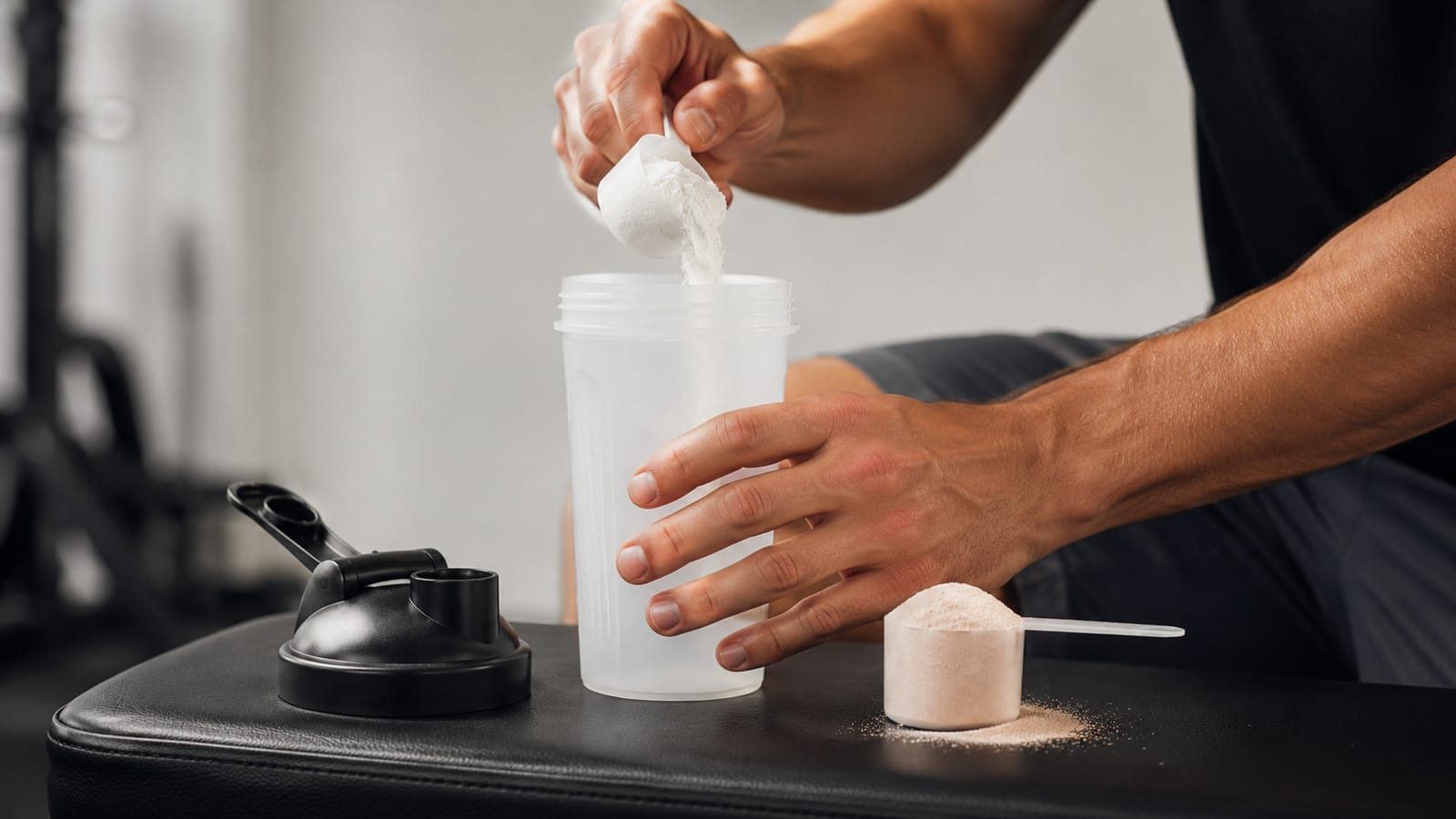
Keep the process boring. Boring routines get repeated.
- Put your normal pre-workout serving into a shaker.
- Add enough liquid for the powder to mix properly.
- Add 3–5 grams of creatine monohydrate.
- Shake until the drink is reasonably mixed.
- Drink it soon after mixing.
- Rinse the shaker so leftover powder doesn’t become tomorrow’s problem.
Creatine monohydrate may not dissolve perfectly in cold liquid. That doesn’t mean it has stopped working. Shake again before drinking, or mix the creatine into a small amount of warm liquid first and then add it to the drink.
You don’t need a special blender, a complicated supplement stack, or a branded creatine blend. If the texture bothers you, take creatine in water or with a meal instead.
Avoid leaving the mixed drink sitting around for long periods. Make it when you need it, drink it, and move on to the workout.
Caffeine, sleep, and hydration
Normal caffeine use does not make creatine ineffective. You can use both if you tolerate the combination and your total caffeine intake doesn’t damage your training.
The bigger issue is individual response. Caffeine can cause jitters, a racing heart, anxiousness, or a hard crash. It can also disrupt sleep even when you think you’ve adapted to it.
That matters because recovery drives your next session. A pre-workout that improves today’s energy but ruins tonight’s sleep may leave you weaker across the week.
Hydration deserves a clear explanation too. Creatine does not mean you should fear normal fluid shifts or avoid using it. Drink regularly, pay attention to thirst, and replace fluids lost through sweating. You don’t need to force excessive water just because the label says creatine.
Track the full pattern for several sessions:
- Did your working sets improve?
- Did your technique stay controlled?
- Did you sleep normally?
- Did your stomach feel fine?
- Did you recover before the next workout?
If the answers are poor, reduce the stimulant burden or remove the pre-workout. Keep the creatine if you still want its daily benefit.
Choosing pre-workout
Choose a transparent label with a clear caffeine amount and a short ingredient list. You should know what you’re taking and how it affects you.
A useful pre-workout should do one main job: help you train with intent when energy or focus is limited. It does not need a dozen novelty ingredients to earn a place in your shaker.
Look for:
- A clearly stated caffeine amount.
- A full ingredient list.
- No proprietary blend hiding the individual amounts.
- A flavor and texture you’ll actually use.
- Ingredients that match your goal rather than a marketing promise.
Be careful with stimulant-heavy products. More stimulation can feel productive, but it may only mask poor sleep, inadequate food, or a badly timed workout.
Beta-alanine may cause harmless skin tingling for some people. That sensation does not prove the product is working, and it is not a reason to take more. If a formula makes you feel unwell, it fails the basic test regardless of how impressive the label looks.
You can check the Food and Drug Administration’s guidance on dietary supplements before buying products. Supplement labels deserve some skepticism because the category has plenty of loud claims and limited accountability.
Side effects and safety
Creatine monohydrate is usually tolerated well, but some people notice bloating or stomach upset. Taking it with food, using the standard daily amount, or splitting it across meals may help.
Pre-workout brings a different set of problems. Caffeine and other stimulants can cause:
- Jitters or restlessness.
- Increased heart rate.
- Headaches.
- Nausea.
- Anxiety.
- Trouble falling asleep.
- Poor recovery after the session.
Don’t train through serious symptoms. Stop using the product and seek medical advice if you have chest pain, fainting, severe shortness of breath, a sustained racing heartbeat, or another reaction that feels beyond normal discomfort.
Talk with a qualified healthcare professional before using creatine or stimulant-based pre-workout if you have kidney disease, heart problems, high blood pressure, are pregnant, take prescription medication, or have another condition that affects supplement safety.
Also check the product for duplicate ingredients. You may already get caffeine from coffee, energy drinks, tea, or medication. The supplement label is only part of the day’s total.
The National Institutes of Health Office of Dietary Supplements provides independent information on dietary supplements and their safety. Use that kind of source instead of trusting a dramatic claim on a tub.
When to skip pre-workout
Skip the pre-workout when you’re already alert, training lightly, or protecting your sleep. Creatine can stay in your routine even when a stimulant doesn’t make sense.
This approach works well for lifters with limited time. Take creatine daily, then reserve pre-workout for sessions that genuinely need more focus or energy.
You may also skip caffeine if:
- You trained late and need to sleep soon.
- You slept poorly and stimulants would only cover the problem.
- You feel unusually anxious or wired.
- Your heart rate feels higher than normal.
- You’re doing easy technique work or low-fatigue training.
- You’re relying on it for every session.
A stimulant can make a bad plan feel better for a while. It cannot improve a workout built on poor technique or too much fatigue.
For most sessions, food and a sensible schedule do enough. If you’re consistently exhausted before training, fix the plan, your meals, or your recovery before adding a stronger product.
The simplest routine
Use this routine:
- Take 3–5 grams of creatine monohydrate every day.
- Mix it into pre-workout when that’s convenient, or take it separately.
- Use pre-workout only when caffeine improves focus without harming sleep.
- Eat enough to support your training.
- Record your sets, reps, and loads.
- Add weight or reps only after you earn the increase with good reps.
- Stop most sets with controlled effort and leave reps in reserve.
- Recover and come back stronger for the next session.
Mixing creatine with pre-workout can be a useful habit, but it isn’t the main driver of progress. The drink should make the plan easier to follow, not more complicated.
The real standard is simple: take creatine consistently, train hard enough to count, keep technique repeatable, and beat the logbook over time. If the pre-workout gets in the way of sleep or recovery, remove it and keep the part that still serves your week.
FAQ
Can you mix creatine with a non-stimulant pre-workout?
Yes. A non-stimulant formula can carry creatine just as well as a caffeinated one. This is the sensible choice if you train late, react poorly to caffeine, or want a flavored drink without extra stimulation.
Is unflavored creatine better for mixing?
Unflavored creatine is the better default if you want control over taste and ingredients. Add it to water, a shake, or another drink without being tied to a pre-workout’s flavor and sweeteners.
Does creatine cause hair loss?
Current evidence does not establish creatine as a direct cause of hair loss. If you notice a change, review your full health picture and speak with a healthcare professional instead of blaming one supplement automatically. You can also read this article on whether pre-workout causes hair loss.
Can you take creatine if you don’t use pre-workout?
Yes. Creatine works without caffeine or a training-day drink. Take it daily while your workouts rely on food, water, and a consistent program.
What if your pre-workout already contains creatine?
Read the label and count that amount toward your daily intake. Don’t add a separate serving without checking the formula first, especially if the product hides ingredient amounts in a blend.
Related: Ashwagandha Timing: Why Consistency Matters Most