How to Use the Afterburn Effect Without Overdoing It

 0
0
 0
0 Keep the afterburn effect in perspective. It’s real, but it’s a small recovery cost after demanding exercise, not a fat-loss loophole. If you want to boost your burn, this easy guide gives you the useful approach: train hard enough to create a response, progress the work, then recover well enough to repeat it.
Last updated: 2026-08-10
What is the afterburn effect, or EPOC?
The afterburn effect is excess post-exercise oxygen consumption, usually shortened to EPOC. After a demanding workout, your body uses more oxygen and energy while returning toward its resting state.
That extra work raises calorie use for a while after training. However, the increase is much smaller than workout marketing often suggests.
EPOC can add to your total energy use. It cannot rescue a poor diet, replace daily movement, or make a random punishing workout productive.
Why does EPOC rise after hard training?
Hard exercise disturbs your normal resting state. As a result, your body has several jobs to handle after the session:
- Restore short-term energy stores
- Return oxygen levels toward normal
- Lower body temperature
- Process exercise by-products
- Repair trained tissue
- Settle heart rate and breathing
Each job needs energy. Therefore, oxygen use stays above baseline until recovery moves further along.
Exercise intensity is the main factor influencing EPOC after aerobic training. Still, effort needs structure. Breathlessness alone doesn’t prove that your muscles received useful work.
How many extra calories does the afterburn effect actually burn?
Expect a small bonus, not a second workout happening while you sit on the sofa.
In one controlled circuit-style resistance training study, young, aerobically fit women lifted for 30 seconds at 80% 1RM followed by one minute of rest. The term 1RM means the heaviest load you can lift once with sound technique.
At 14 hours post-exercise, energy expenditure was 33±5 kcals/30 minutes, compared with 30±3 kcal at baseline. The difference existed, but it was modest. The same study found no sustained resting metabolic rate change at 24 hours.
A treadmill high-intensity interval training study in young, aerobically fit women found a similar result. Participants completed 30-second runs at 90% VO₂ max followed by one minute of stationary recovery. VO₂ max is the highest rate at which your body can use oxygen during hard exercise.
That workout produced 3 kcal per 30-minute measurement above baseline at 14 hours post-exercise (33±4 kcal for HIIT versus 30±3 kcal at baseline). Neither HIIT nor circuit-style resistance training sustained a resting metabolic rate change at 24 hours.
EPOC helps, but it doesn’t drive fat loss. Your total training work, food intake, daily movement, and consistency matter far more.
How long does the afterburn effect last?
EPOC is usually strongest soon after a demanding session. It then falls as your body restores its resting balance.
One resistance exercise study reported elevated post-exercise oxygen consumption for as long as 38 h post-exercise. That was a maximum reported duration after a specific resistance workout, not a promise for every lifter or every session.
Higher training volume and intensity can extend the response. However, a longer afterburn also reflects a larger recovery demand. Chasing the longest possible effect can leave you too tired to beat the logbook next time.
Which workouts produce the most useful afterburn?
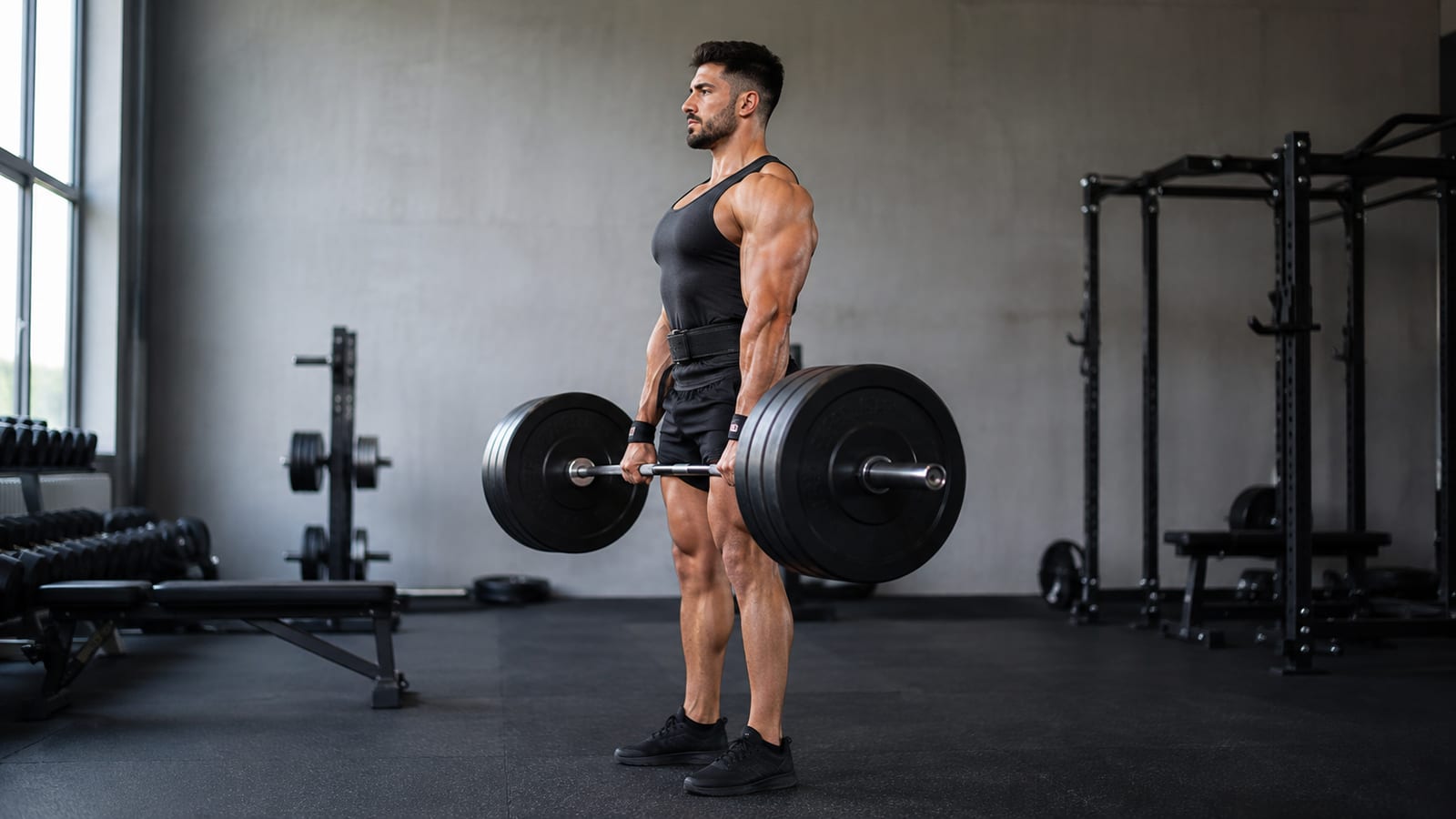
Full-body resistance training gives you the best return because it combines meaningful muscle work with measurable progression. Loaded carries, intervals, and sensible circuits can also raise the recovery cost without turning the workout into random punishment.
| Training style | Likely EPOC demand | Coaching judgment |
|---|---|---|
| Full-body resistance training | Moderate to high | Keep it. You can track load, reps, and technique. |
| Loaded carries | Moderate to high | Useful as a short finish if posture stays solid. |
| Hard intervals | High | Keep them brief enough to preserve quality. |
| Resistance circuits | Moderate to high | Useful when exercise order doesn’t ruin technique. |
| Easy steady cardio | Low | Keep it for health, recovery, and extra activity. |
| Small isolation exercises with long rests | Low | Useful for muscle work, but not an afterburn tool. |
Compound exercises work well because they involve more muscle. Squats, presses, rows, hinges, and carries make the body handle more total work.
However, complexity adds nothing by itself. A crowded circuit with poor reps is still a poor session. Make every set serve a purpose.
For practical ways to combine both training styles, see this guide to mixing cardio and weight training.
How can this easy guide help you boost your burn?
Use a repeatable framework. You don’t need new exercises every week, and you don’t need to finish every session on the floor.
- Start with stable compound lifts. Choose a squat or leg press, a hip hinge, a press, and a row or pulldown.
- Use repeatable technique. Keep the same range of motion and control so your logbook means something.
- Train with intent. Finish most productive sets with clean reps still available instead of grinding until form breaks.
- Control your rest periods. Rest long enough to protect performance, but don’t let a simple session drift.
- Add a short conditioning finish. Use a bike, rower, loaded carry, sled, or simple bodyweight interval.
- Progress one part at a time. Add weight or reps, improve control, or complete the same work with less strain.
- Watch recovery. If performance, sleep, or motivation falls, reduce the conditioning before cutting the main lifts.
This is how you earn the effect without paying for it all week. The goal is sustainable progress, not the hardest session you can survive.
What does an efficient afterburn-focused workout look like?
Build the session around productive lifting, then finish with brief conditioning. Strength work comes first because fatigue from intervals can make your technique sloppy.
Use this template:
- Warm-up: Rehearse the movements and raise your body temperature.
- Lower-body lift: Choose a squat, leg press, or split squat.
- Upper-body press: Use a bench press, overhead press, or push-up variation.
- Hip hinge: Pick a deadlift variation, Romanian deadlift, or hip thrust.
- Upper-body pull: Use a row, pulldown, or pull-up variation.
- Conditioning finish: Alternate hard work with controlled recovery on a stable exercise.
- Cool-down: Move easily until breathing settles.
Record the exercises, loads, reps, and how the final productive set felt. Then try to improve one clear detail next time.
If you prefer bodyweight training, a structured calisthenics interval workout can work. Keep the movements simple enough to perform well while tired.
Which exercises and sessions create minimal afterburn?
Easy walking, relaxed cycling, mobility work, and low-effort lifting usually produce less EPOC. Isolation exercises with generous rest also create a smaller whole-body recovery demand.
That doesn’t make them useless. Easy movement supports health and recovery, while curls, lateral raises, and leg extensions can provide direct muscle work without crushing the rest of your week.
Judge the exercise by its job:
- Use easy cardio for recovery, health, and daily activity.
- Use isolation work to train a target muscle.
- Use technique sessions to practise a lift with low fatigue.
- Use demanding full-body work when you want a larger training and recovery stimulus.
Not every session needs to boost your burn. Some sessions should help you recover and come back stronger.
How do you estimate your own EPOC?
You can’t measure EPOC accurately from a smartwatch or gym machine. A calorie readout uses estimates based on limited inputs, and it cannot directly track every part of post-workout recovery.
Instead, record what you can use:
- Loads and reps
- Exercise selection
- Session difficulty
- Technique quality
- Sleep and soreness
- Performance in the next workout
- Weekly body-weight or waist trends, if fat loss is the goal
A higher heart rate after training doesn’t tell you how many extra calories you burned. Nor does a larger sweat patch.
Use wearables to compare similar sessions under similar conditions. Don’t treat the calorie number as a precise food allowance.
What should you eat and do after training?
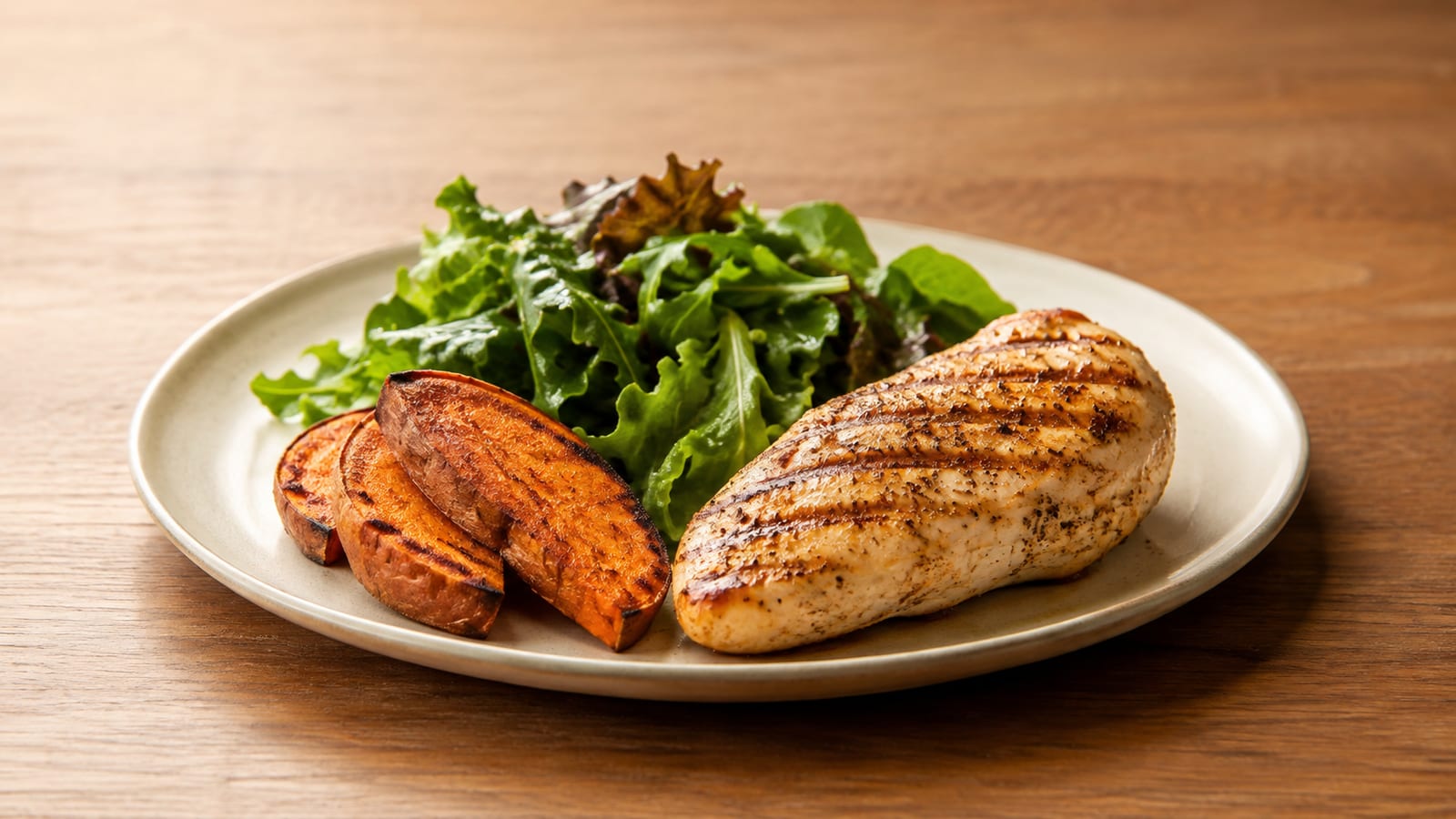
Eat enough protein across the day to support muscle repair. Then match carbohydrate intake to your training demand, especially if you lift and perform conditioning in the same week.
Hydration matters too. Replace the fluids you lost, and include normal meals rather than searching for a special post-workout product.
Sleep is where much of the adaptation gets finished. If hard training keeps rising while food and sleep stay poor, the plan stops being productive.
Use rest days for easy movement or complete rest, depending on how you feel. The plan has to fit your week, and your joints get a vote.
When should you reduce afterburn-style training?
Reduce the conditioning when fatigue starts lowering the quality of your main work. Common warning signs include:
- Loads or reps falling across several sessions
- Poor sleep after hard workouts
- Persistent soreness that changes your technique
- Joint pain rather than normal muscle fatigue
- Dread before sessions you usually handle well
- Easy training feeling unusually difficult
First, shorten or remove the conditioning finish. Keep the basic lifts and use manageable effort so you retain the habit and useful training stimulus.
If recovery still doesn’t improve, reduce total work or schedule more rest. You don’t lose progress by adjusting a plan that has stopped working. You protect your chance to train well next week.
FAQ
Does soreness prove that I created a large afterburn effect?
No. Soreness reflects unfamiliar stress and muscle damage more than productive calorie use. A new exercise can make you sore without giving you a better workout.
Track performance instead. If your technique stays clean and your logbook improves, the session is doing its job.
Can beginners train for the afterburn effect?
Yes, but beginners should learn the movements before adding hard circuits or intervals. Poor technique becomes harder to control as fatigue rises.
Start with basic strength work and a manageable conditioning finish. Add difficulty only after the session feels repeatable.
Does sweating more increase EPOC?
No. Sweat mainly helps control body temperature. Heat, clothing, humidity, and hydration can change how much you sweat without changing the quality of the workout.
Use performance and recovery to judge the session. Sweat is a cooling response, not a calorie meter.
Do I need supplements to increase afterburn?
No. Supplements cannot replace productive training, enough food, hydration, and sleep.
If those basics aren’t in place, another product only adds cost. Do this first: train consistently and recover well enough to progress.
Can I use afterburn workouts while gaining muscle?
Yes, provided conditioning doesn’t reduce lifting performance or recovery. Keep muscle-building work as the priority and place demanding intervals where they cause the least interference.
If your lifts stall and fatigue keeps rising, cut conditioning before cutting productive sets. This guide to cardio while bulking explains how to keep both working together.