Build Stronger Abs and Glutes With Two Gym Days

 0
0
 0
0 Sculpting abs and glutes takes progressive strength work, sensible food, and enough recovery. For sculpting abs and glutes, my gym workout plan alternates two focused sessions built around hip extension, a squat pattern, direct abdominal work, and stable single-leg training. Train hard enough to count, keep your form repeatable, and earn each increase. Endless crunches and random glute burnouts won’t do the job.
Last updated: 2026-08-07
What is my gym workout plan for sculpting abs and glutes?
Use Workout A and Workout B on separate, non-consecutive days. Alternate them through the week rather than repeating your favorite session.
If you train more often, add upper-body work or repeat the next workout in the sequence. However, don’t turn a focused plan into daily punishment. Your glutes need hard work, but they also need time to recover and come back stronger.
| Workout A | Main job | How to perform it |
|---|---|---|
| Barbell hip thrust | Heavy glute work | Pause at the top without arching your lower back |
| Romanian deadlift | Glutes and hamstrings | Push your hips back and keep the load close |
| Step-up | Single-leg strength | Drive through the working leg instead of jumping from the floor |
| Cable crunch | Abdominal flexion | Bring your ribs toward your pelvis |
| Side plank | Side-core stability | Keep your hips stacked and your body straight |
| Upper-body pull | Balanced training | Choose a row or pulldown |
| Workout B | Main job | How to perform it |
|---|---|---|
| Squat or leg press | Glutes and thighs | Use the deepest range you can control without pain |
| Glute bridge | Shortened-position glute work | Finish with your glutes, not your lower back |
| Split squat | Single-leg strength | Keep the front foot planted and lower under control |
| Reverse crunch | Lower-abdominal control | Curl your pelvis instead of swinging your legs |
| Pallof press | Anti-rotation core strength | Resist the cable rather than twisting toward it |
| Upper-body press | Balanced training | Choose a machine press, dumbbell press, or push-up |
Do a few productive sets for each movement. Use moderate reps for the main lifts and somewhat higher reps for smaller exercises. Stop while you can still perform another clean rep rather than grinding until your position falls apart.
The plan is simple on paper. However, it becomes demanding in practice once every set has a clear target and every rep looks the same.
Who should use this plan?
This plan suits healthy beginners and intermediate lifters who want stronger glutes, firmer abdominal muscles, and a manageable gym schedule. It also works well if your current routine is a pile of exercises with no clear progression.
The World Health Organization’s physical activity guidance recommends muscle-strengthening work on 2 or more days a week. That gives this plan a sensible floor without forcing you into a crowded training week.
Consistency matters more than squeezing in another workout. Around 50% of people drop out within 6 months, and more than 60% struggle to continue beyond three months. A plan you can repeat beats a more impressive plan you abandon.
This routine isn’t the right starting point if you have sharp hip, back, pelvic, or knee pain. Get the problem assessed rather than trying to train through it. Your joints get a vote.
What does “sculpting” actually mean?
Sculpting isn’t a special training method. You build the glutes and abdominal muscles through resistance training, then manage body fat if you want more visible definition.
Ab exercises can make your core stronger and thicker. However, they don’t choose where your body loses fat. A hundred rushed crunches won’t pull fat from your waist.
Glute training works the same way. Hip thrusts, squats, hinges, and single-leg exercises give the muscles a reason to grow. Squeezing your glutes during a warm-up may help you feel them, but that isn’t the main event.
For more detail on the body-fat side, read this guide on how to get visible abs. Keep the standard realistic: build muscle, manage food, and give the process time.
How should you warm up?
Use a short, specific warm-up that prepares you for the first demanding exercise. Don’t spend half the session collecting foam rollers and resistance bands.
Research on structured warm-up programs found a 36% reduction in sports injury risk. That doesn’t mean this gym warm-up guarantees safety. Still, it supports doing more than walking in cold and loading the bar.
Follow this sequence:
- Raise your body temperature with easy cycling, walking, or rowing.
- Move your hips and trunk through comfortable ranges.
- Perform bodyweight versions of the first exercise.
- Add load through gradual practice sets.
- Start your working sets once your movement feels stable.
Useful warm-up movements include glute bridges, dead bugs, bodyweight squats, hip hinges, and controlled leg swings. Pick the drills that prepare your first lift. You don’t need every exercise before every session.
How hard should each set feel?
Finish most sets when your next rep would probably become slow or untidy. That is hard enough to count without making every exercise a test of survival.
Safe isolation exercises can go closer to failure. For example, cable abductions and machine crunches carry less technical risk than a heavy squat or Romanian deadlift. Even then, the final rep should still resemble the first.
Don’t confuse burning with progress. High-rep glute exercises often burn because the muscle is working for a long time. The burn tells you the set is uncomfortable, not that the exercise has earned permanent status in your plan.
Use this check after each set:
- Did the target muscle do most of the work?
- Did your range of motion stay consistent?
- Could you repeat the technique next week?
- Did the set get close enough to your current limit?
- Can you recover before the next session?
If the answer is yes across the board, keep it. If your lower back takes over every glute exercise, reduce the load and fix the position.
Which exercises deserve priority?
Build the plan around movements that you can load, control, and repeat. Exercise variety has a place, but changing the routine every week ruins your logbook.
Hip thrusts and bridges
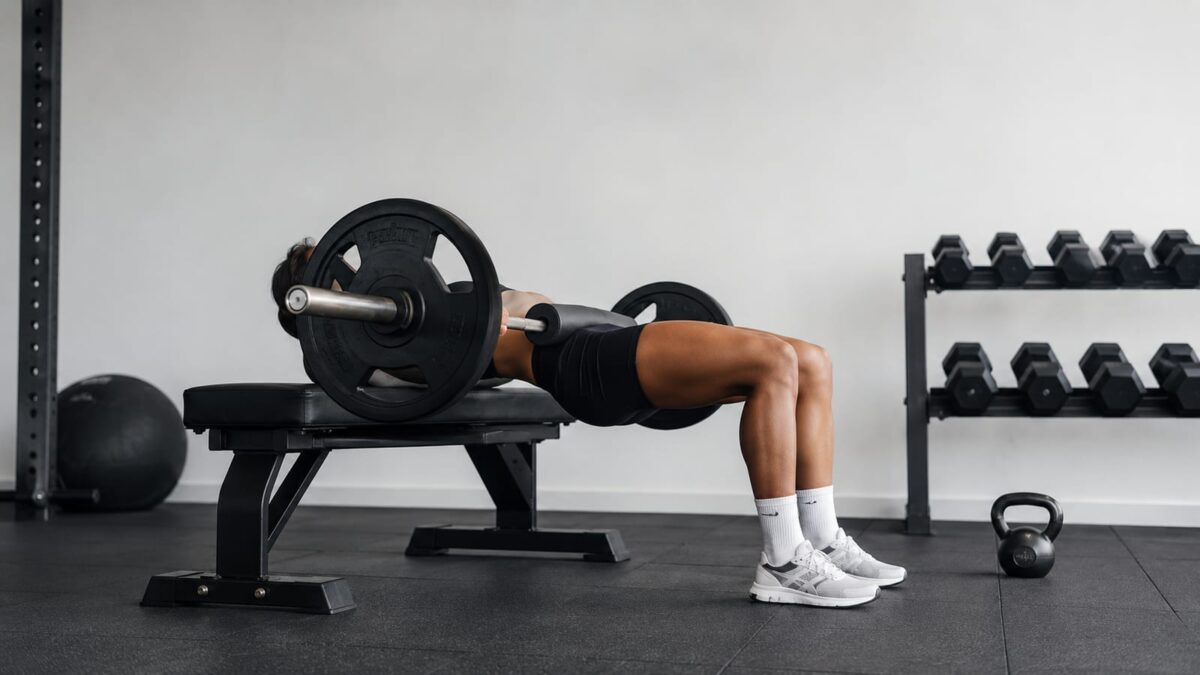
The barbell hip thrust is a strong glute exercise because it loads hip extension heavily near the top. Electromyography, or EMG, measures electrical activity in a working muscle. Studies have reported mean gluteus maximus activity from 55–105% of maximum voluntary isometric contraction during barbell hip thrusts.
Those figures sound decisive, but EMG isn’t a muscle-growth scoreboard. Different testing methods have also produced large differences. So keep the hip thrust if you feel your glutes working, can progress it, and tolerate the setup.
At the top, finish with your hips rather than throwing your ribs upward. If your lower back cramps, shorten the range and lower the load.
Squats, leg presses, and split squats
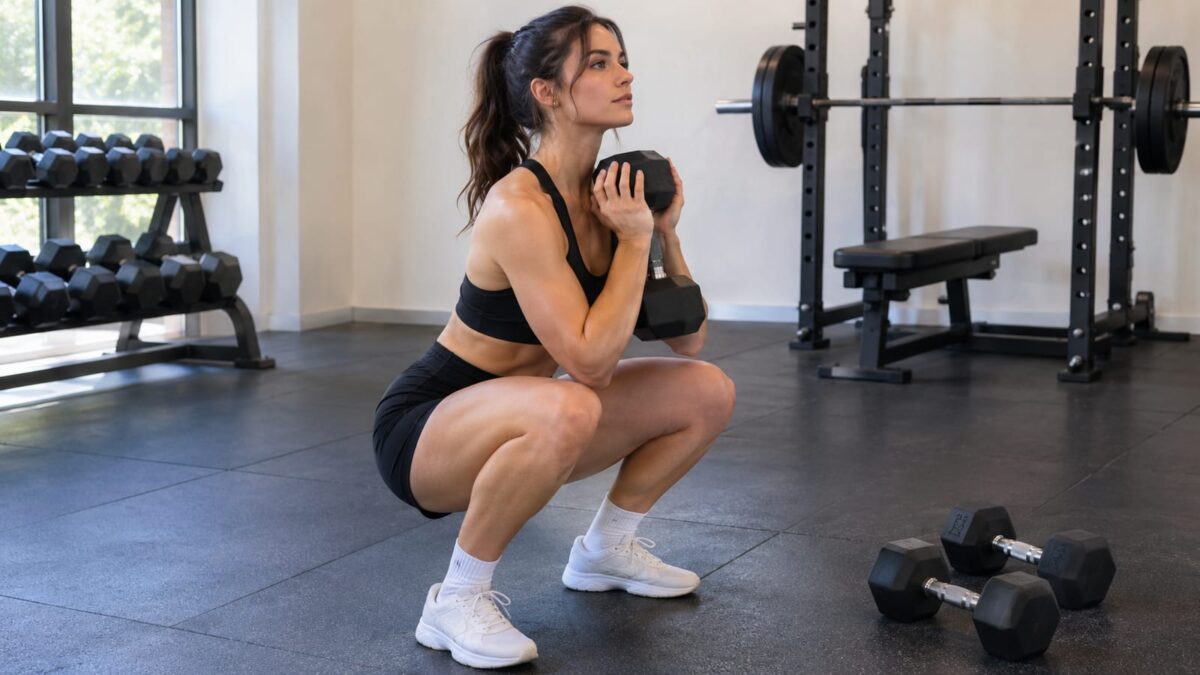
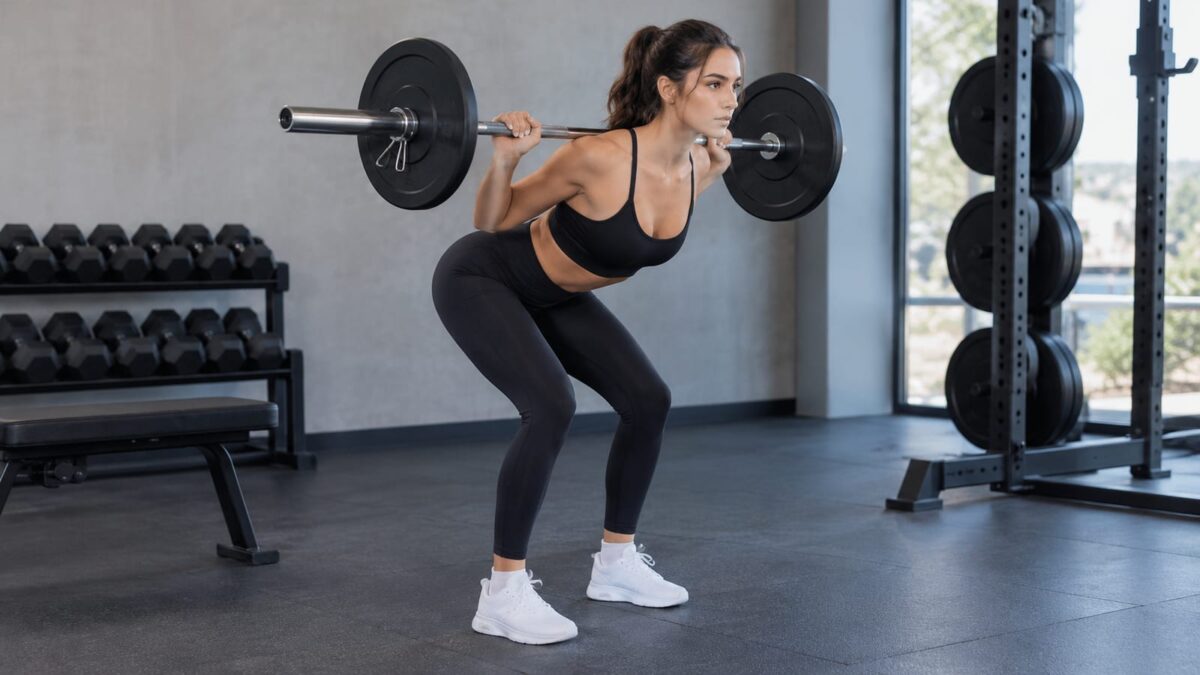
These exercises train the glutes in a deeper hip position while also building the thighs. Use the option that lets you descend under control and push hard without joint pain.
A barbell squat isn’t mandatory. A leg press may be easier to stabilize, while a split squat gives each leg more independent work. The right pick is the one you can progress with repeatable technique.
If your knees dislike one version, change your stance, range, or exercise. Don’t force an exercise because it photographs well.
Hinges and back extensions
Romanian deadlifts and back extensions load the glutes and hamstrings while the hips move backward. However, they only work well if you can separate hip movement from lower-back movement.
Lower the weight until you can keep your trunk controlled. Then add weight or reps over time. Good reps before more weight.
Direct abdominal work
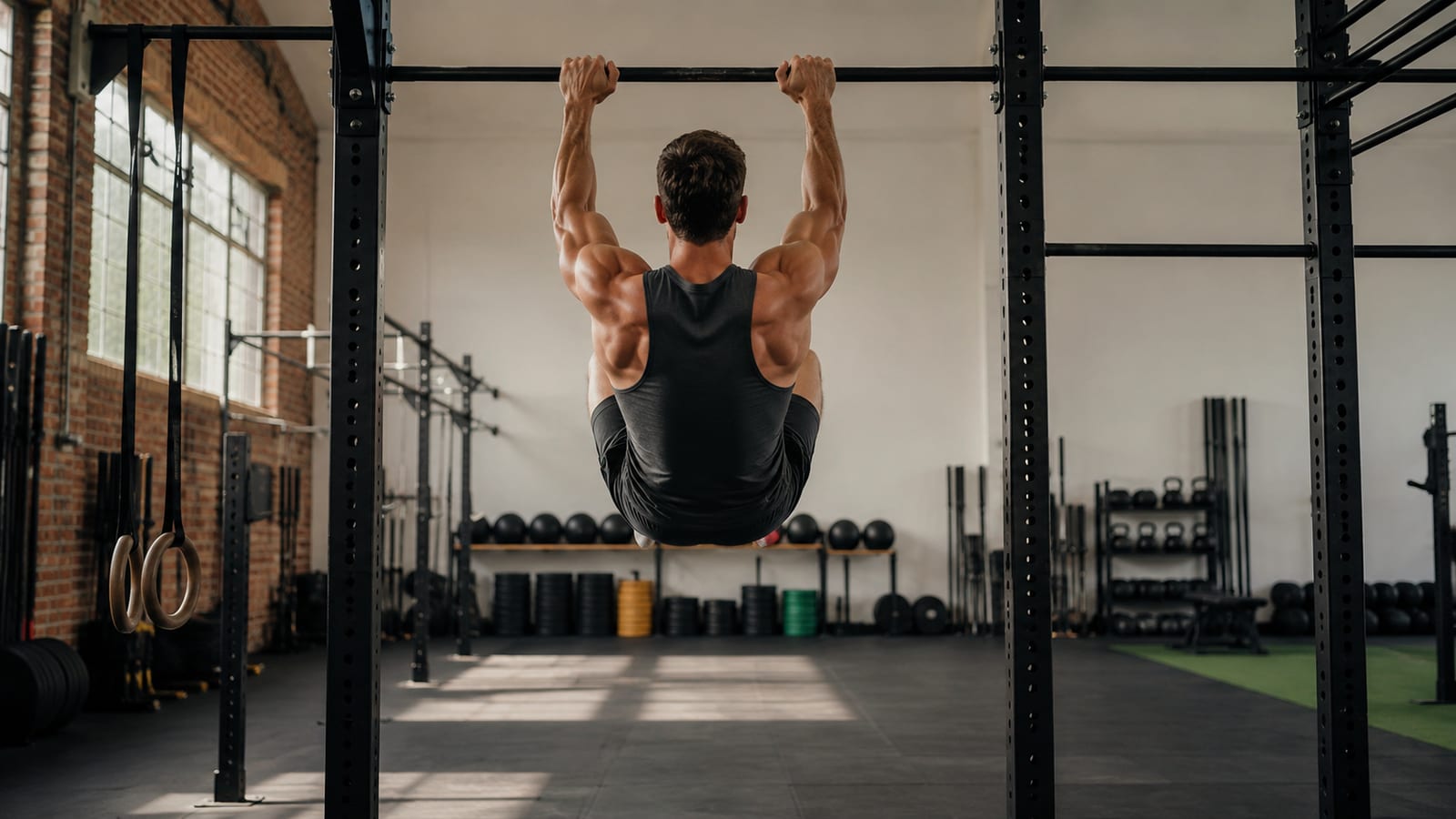
Use more than one kind of core exercise. Cable crunches and reverse crunches train controlled spinal and pelvic movement. Side planks and Pallof presses train your core to resist unwanted motion.
That combination is more useful than trying to hit “upper abs” and “lower abs” with minor exercise changes. If you need equipment-free options, these calisthenic ab exercises give you workable substitutions.
How do you progress the plan?
Choose a rep range for each exercise and record every working set. Stay with the same load until you reach the top of that range with clean form. Then use the smallest practical increase.
You can also progress by adding a rep, controlling the lowering phase better, or using a fuller range of motion. Change one thing at a time. Otherwise, the logbook can’t tell you what improved.
Use this progression order:
- Make the technique repeatable.
- Add quality reps within your chosen range.
- Reach the top of that range across your working sets.
- Increase the load by the smallest practical amount.
- Build the reps back up.
Don’t add weight because the calendar says you should. Earn the next increase.
If performance drops across repeated sessions, check sleep, food, soreness, and exercise selection. More work is the wrong answer when you’re already failing to recover.
Can you sculpt your abs and glutes without squats or lunges?
Yes. Squats and lunges are useful, but neither is compulsory.
For a knee-friendlier gym session, use hip thrusts, glute bridges, Romanian deadlifts, hamstring curls, back extensions, and cable abductions. For your core, use dead bugs, cable crunches, Pallof presses, and side planks.
However, don’t label all knee movement as dangerous. Pain-free leg presses, step-ups, or shallow squat variations may still fit. Start with the range you control, then expand it if your knees respond well.
If every knee-bending exercise hurts, stop guessing. That needs individual assessment, not another exercise list.
Can resistance bands or bodyweight replace gym equipment?
They can replace some exercises, especially when you’re traveling or training at home. Bands work well for abductions, kickbacks, Pallof presses, and assisted core drills. Bodyweight glute bridges, single-leg bridges, side planks, and reverse crunches also have a place.
The trade-off is progression. A loaded machine or barbell makes small increases easier to measure. Bands vary with stretch, while bodyweight exercises may jump from too easy to awkward.
Use bands or bodyweight when they fit your situation. However, find a way to make the work harder over time through better control, more reps, a harder variation, or added resistance.
How much cardio should you add?
Use cardio for heart health, work capacity, and extra energy expenditure. Don’t use it to punish yourself for eating.
The World Health Organization recommends 150–300 min of moderate intensity or 75–150 min vigorous activity each week for adults. The plan also allows an equivalent combination. For additional health benefits, the older recommendation reaches 300 minutes per week.
You don’t need to cram that work around every lower-body session. Spread it across the week, and choose modes your joints tolerate. Walking, cycling, swimming, and easy machine work are all reasonable options.
Hard intervals can interfere with leg recovery if you place them carelessly. If your glute performance drops, reduce the cardio strain or move it farther from demanding lower-body work.
What should you eat for visible abs and stronger glutes?
Eat enough protein and total food to support training. Then adjust overall intake based on the result you want.
If your main goal is larger glutes, a modest calorie surplus can support muscle gain. If your main goal is sharper abdominal definition, you’ll usually need a calorie deficit. Trying to push both goals aggressively at once often produces poor training and little visible change.
Build most meals around:
- A clear protein source
- A carbohydrate source that supports training
- Fruit or vegetables
- Enough dietary fat for a balanced intake
- Fluids across the day
You don’t need a flawless menu. You need an intake you can repeat while body weight, waist measurements, gym performance, and recovery move in the intended direction.
Also, don’t slash food as soon as your abs fail to appear. First check whether you have built enough abdominal muscle and followed the plan long enough to judge it.
How do you know the plan is working?
Judge the plan with evidence, not soreness. Soreness usually falls as your body becomes familiar with training, which is useful rather than disappointing.
Track these markers:
- Loads and reps on the main exercises
- Waist and hip measurements under the same conditions
- Progress photos taken consistently
- Body weight trends
- Technique quality
- Pain, fatigue, and willingness to train
Your gym numbers should improve gradually. Meanwhile, your measurements and photos tell you whether your body composition is moving in the right direction.
Give the plan enough time to produce a pattern. If nothing improves and recovery is good, add a little work or change the weakest exercise. If performance falls and soreness lingers, remove work before adding more.
For sculpting abs and glutes, my standard stays simple: beat the logbook with good reps, eat for the goal, and keep the plan recoverable.
FAQ
Should I wear a lifting belt for ab and glute exercises?
A belt can help you brace during heavy squats, hinges, and similar lifts. However, it doesn’t switch off your abs or replace proper bracing.
Learn to expand and stiffen your trunk before relying on a belt. For lighter core work and most glute isolation exercises, you usually won’t need one.
Is glute soreness a sign that the workout worked?
No. Soreness shows that the training was unfamiliar or stressful, but it doesn’t measure muscle growth.
Use performance as your main test. If you can add controlled reps or load while recovering well, the exercise is doing its job.
What should I do if one glute feels weaker?
Start single-leg exercises with the weaker side and use the same load and reps on both legs. Don’t give the stronger side extra work.
Also, check foot pressure, hip position, and range of motion. If the difference comes with pain, numbness, or a clear loss of strength, get it assessed.
Do waist trainers help reveal abs?
No. A waist trainer may temporarily change how your waist looks while you wear it, but it doesn’t build abdominal muscle or remove fat from that area.
Put that effort into progressive core training, food control, and daily activity. Those tools change the result rather than hiding it.
Can I train during my menstrual cycle?
Yes, if you feel well enough to train. Performance and symptoms can vary, so adjust the load or exercise choice when needed.
You don’t need a completely different program for every phase. Use your logbook, energy, and symptoms to make the day’s decision.
Related on this blog
Related: How Anaerobic Training Helps Reduce Belly Fat
Related: Build Outer-Quad Strength Without Stance Tricks